

Welcome to Issue 3: A Note from the Editor-in-Chief of Semi-Structured
by Thurka Sangaramoorthy and Elise Ferrer
In this special issue, “On Ethnographic Witnessing: Student Encounters with Immigration Court,” we’re honored to present an ambitious collection of 22 student pieces which together offer an embodied, emotional, and analytically rich account of immigration courts across the country in this contemporary moment. As part of immigration-based projects under the direction of scholar-activists Lauren Heidbrink, Amelia Frank-Vitale, and Rebecca Galemba (who developed, curated, and edited this issue), students logged hundreds of hours in immigration courtrooms across the country, gaining both critical training in ethnographic practice and a crash course in immigration law. The issue offers a space where students’ insights can move beyond the courtroom and the classroom and into the wider public, for whom these insights are critical.
Letter from the Issue Editors: On Ethnographic Witnessing: Student Encounters with Immigration Court
by Lauren Heidbrink, Amelia Frank-Vitale and Rebecca Galemba
Immigration courts provide students with an immersion in immigration law and, especially, in the disjunctures between law on the books and law in practice. Students see and feel for themselves how opaque and confusing bureaucratic processes unfold in real time. They observe how rules are interpreted, contested, and experienced. They come to see that legal decisions are shaped by not only statutes and formal rulings, but also language access, courtroom culture, technology, uneven representation, detention, and the discretionary practices of judges, attorneys, interpreters, and clerks (Barak, 2023). At a moment of rapid change in immigration law and policy, they also see how formal policies are translated unevenly into courtroom practice.
You have the right to an attorney — but not at government expense
by Laura Giselle Romero | Essay
Immigration court is not “real” court – with few of the due process protections guaranteed in criminal proceedings. But the cruelty the court inflicts is very real.
Performative Due Process: Opacity and Structural Coercion in Colorado’s Immigration Proceedings
by Ella Iveslatt | Essay
Removal proceedings operate on more than just immigration law alone. The opaque structure of the immigration system allows its structural violence to go unnoticed and appear legitimate, fair, and unproblematic.
The Time to Seek Relief
by Katherine Mora | Essay
Respondents in immigration court have a collective ask: to have more time.
The Hopeless Observer
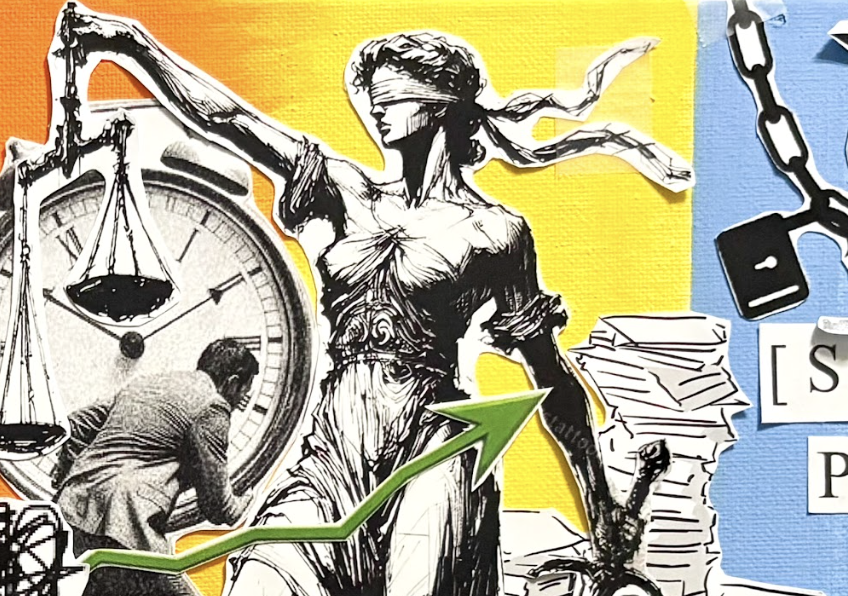
by Stacey Montoya | Art Piece
Courtwatching can feel helpless, but documenting what happens turns observation into public witness and a call for change.
Dehumanization and Confusion: How the System Manipulates Language to Exclude Individuals From Their Own Hearings
by Jennifer Gutierrez Marquez | Essay
This account uses the ethnographer's bilingual experiences to detail how language can be used as a tool of exclusion, confusion, and dehumanization in the immigration system. It details general patterns seen in translation that omit or misconstrued prevalent information in immigration cases that have large implications on individuals' futures. Additionally, it presents a specific example observed at the GEO Aurora Detention Facility of how language can be used to exclude and dehumanize individuals.
“You are Not Welcome Here”
by Brian Betcone | Essay
Immigration court’s hostility often appears quietly in missing interpreters, rushed instructions, and polite indifference.
Mundane Absurdities: Theatrical Abstraction and Embodying the Unseen (A Performance)
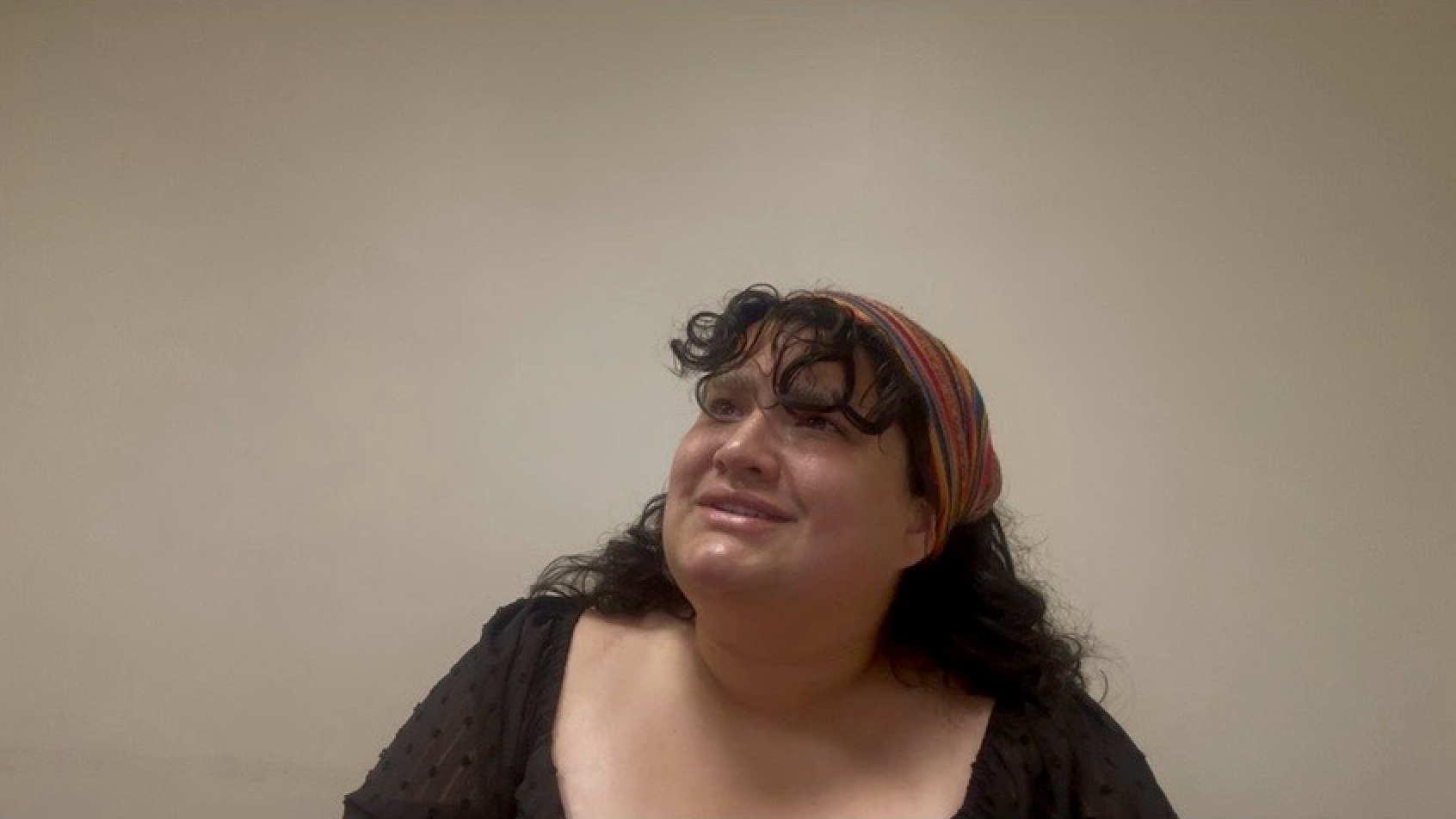
by Amelia Wray | Performance, Monologues
What can a flower stand or a deli counter translate about immigration court?
More than Disembodied Stories: Seeing the Human Experience Behind Migration
by Kelly Nilan | Essay
Migrants are often reduced to policy categories and legal outcomes rather than understood as people navigating difficult circumstances and trying to improve their lives. This essay reflects on my experience meeting a family in the Family Expedited Removal Management (FERM) program to explore the importance of empathy and humanization in conversations about immigration and justice.
The Day the Judge Drew the Line
by Herlinda Ocampo | Essay
I came to observe a legal process but left realizing how fragile justice can feel when someone’s fate depends on a system that is not always ready for them.
Dignity in Removal Proceedings
by Sophia Gurrola | Essay
A judge’s simple choice to keep a family together in court shows how dignity can still be protected in small but powerful ways.
Where There is Humanity, There is Hope
by Jacqueline Nguyen
Even in a court system filled with fear and grief, moments of solidarity remind us that humanity and hope remain.
How Detention Drives Desperation in Immigration Court
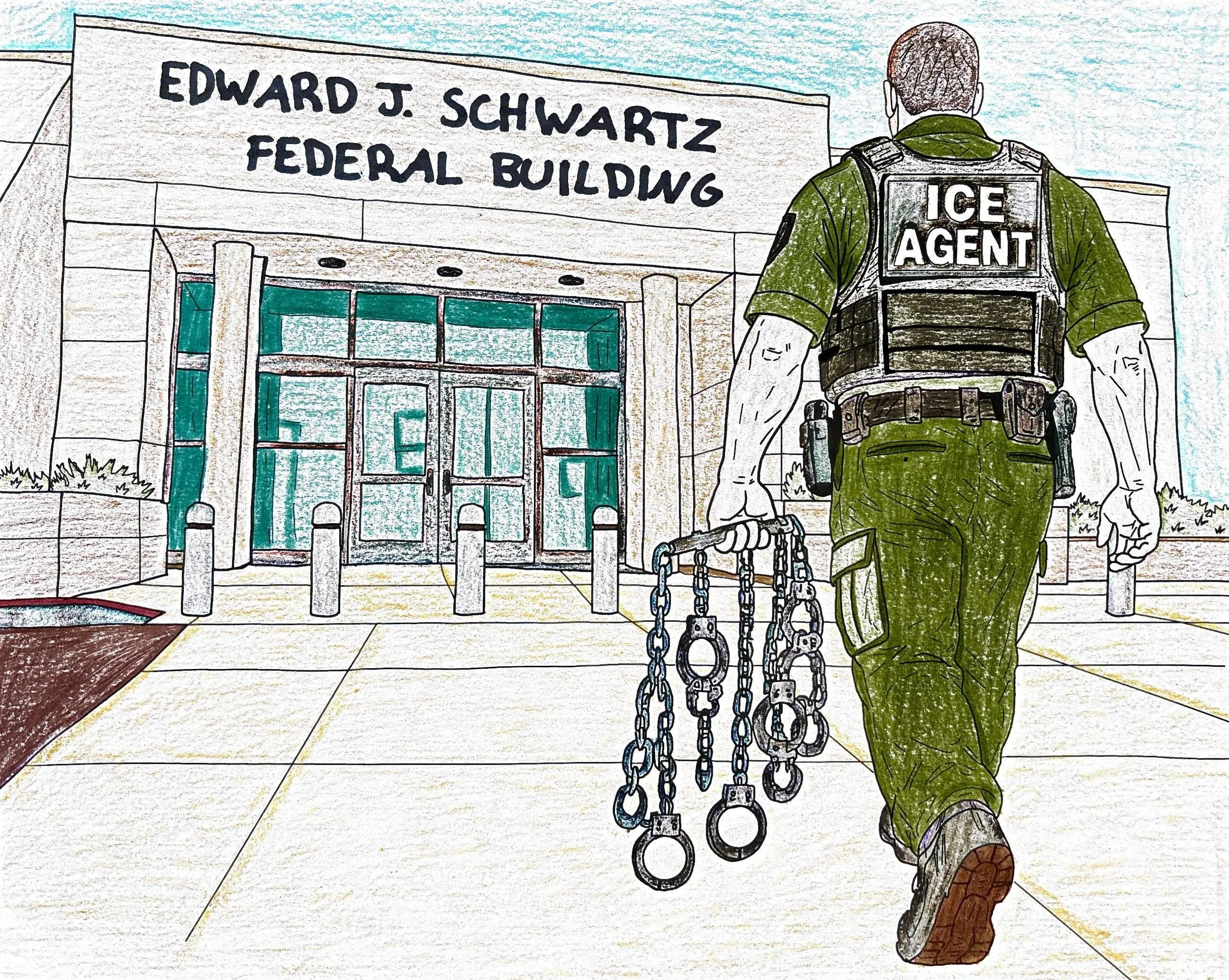
by Olivia Sanchez | Essay
Behind locked doors and barbed wire, the immigration court at Krome Detention Center operates under conditions unimaginable in most other American legal settings.
Echoes of Separation: From Childhood Trauma to Courtroom Advocacy
by Leticia Madrigal Tapia | Essay
Through a combination of personal narrative and formal court observation at the GEO Aurora Detention Facility, this piece illustrates the systemic cruelty of the U.S. immigration system.
Separated by a Courtroom Bar: Positionality in Immigration Court Research
by Jasmine Salgado Simental | Essay
This reflection showcases how positionality shapes ethnographic research in immigration court, where similar cultural backgrounds, and personal experiences influence observation.

Unraveling
by Gabriela Afable | Art Piece
Unraveling captures the exhaustion and enormity of confronting systems designed to hold people in place.
Cries from the Courtroom
by Mikaela Lavandero | Essay
This piece is pulled from a journal entry from July 31st, 2025, during an especially tumultuous visit to New York City’s Immigration Court in which the perils and violence of family separation and ICE turned a courtroom hallway into a scene of chaos.