

Bodies of Evidence: Toolkit-making as feminist praxis, or how Indian feminists joined forces against online gendered disinformation
Prarthana Mitra is a feminist researcher and communications specialist working with digital rights movements in the global south to seed decolonial, collective, and safer digital futures. Currently, they are a Fellow with Digital Narratives Studio (Chinese University of Hong Kong), Goethe Institute, and Museum of Art and Photography (India), reimagining AI-human relationalities in the context of media and culture.
Keywords
Tech-facilitated gender-based violence; online disinformation; digital futures; feminist ethnography; feminist civil society; qualitative data; platform accountability
Methodological Takeaway
In order to document India’s online gendered disinformation landscape and curate a resource that empowers grassroots feminists to counter such online violences in their everyday lives, I modelled my ethnographic exercise on feminist modes of archiving, mobilising, and disseminating knowledge. Picking up where feminist global south ethnographies of the internet left off, I question what toolkits and toolkit-making as a feminist praxis must look like, in order to situate harms and freedoms, facts and norms, safety and rights, intersections and regulations within the discourse around disinformation. By the end of the project, I emerge with more than just a toolkit. Tenets of shared responsibility, memory, and emotions emerge as critical pillars in ethnographic practice, for addressing not only the specific issues of online-gender based violence but with broader implications for understanding of both technology and violence.
For more information on the toolkit and the toolkit-making process: Please email prarthanawrites@gmail.com
AI Statement:
This paper made limited use of AI tools to assist with formatting and generating citations (and to craft this AI statement); all sources were independently selected, verified, and reviewed by the author to ensure accuracy and academic integrity.
Names** have been changed to preserve anonymity.
Introduction
It was just a heart emoji. It shouldn’t have unraveled Raka’s** plans for the future. Yet, when the emoji was inserted between thirteen-year-old Raka and one of her male schoolmates in a photograph – and it circulated over local communication networks like WhatsApp and Facebook – the heart posed a lot of harm. Framed in this way, interpreted through local patriarchal beliefs and amplified by the speed of digital pathways, the heart emoji transformed from a mundane digital object into proof of disgrace. On seeing these photos, the girl’s family forced her to drop out of school.
Kashish**, another school-going teenager from rural India, shares a similar experience. When an image of her and a boy riding a bicycle through foggy fields was shared on Facebook along with a suggestive caption insinuating promiscuity, Kashish’s parents were subject to slander and ostracisation from the rest of their local “mohalla” or community. “As a result of this, my phone access was restricted and my freedom of movement outside the house was completely curbed,” she claims, in her conversation with rural journalists of Khabar Lahariya, a feminist rural women-led newsroom based in India.
Although these images, in and of themselves, may not have been sexual or “obscene”, due to the gender and sexual norms in India, being pictured with boys can be seen as taboo and inappropriate, especially for young women and girls, and can lead to grave consequences. As we see in Raka’s case, her access to education is severed, while Kashish is subject to constant surveillance, which are both huge blows to young women’s agency and autonomy.
Curiously, despite the damage these images caused, the digital tools through which they circulated had no accountability to offer. Since there was “nothing objectionable” about the images themselves that warrant taking them down or penalising the makers or distributors of such disinformation, it left the victims with no recourse for justice. Such instances, pervasive across India, have ignited massive debates lately, on the inadequacy and redundancy of one-size-fits-all reporting mechanisms built into social media platforms. It has also opened up questions around what counts as online harm.
Recently, media scholars Marilia Gehrke and Eedan R Amit-Danhi defined gendered online disinformation as the employment of systematic and multidirectional flows of violence through (un)conscious content manipulation, audience engagement, and victim-blaming to prevent women and gender minorities from further political participation, “highlighting a system enacting, experiencing, and witnessing violence.”
Between 2022 and 2025, while working with newsrooms like Khabar Lahariya and young women like Raka and Kashish, I was collecting stories and experiences which made this system visible in the Indian context. At the time, I was leading projects in the Knowledge and Communications thematic at Point of View, a Mumbai-based non-profit working at the intersection of gender, sexuality, and technology. This work included raising the issue of gendered disinformation at global stages like RightsCon, MisinfoCon, UN World Data Forum, Association for Women in Development (AWID) Forum, Digital Rights in Asia-Pacific (DRAPAC) Conference, and Asia-Pacific Internet Governance Forum (APrIGF).
My co-researchers and I were tapped into what we read as a momentum building around disinformation; at the time, many feminist organisations in the Majority World were beginning to grapple with and assess this problem in their respective contexts. We were keen on joining these efforts to address the gaps in counter-strategies and strengthen community-evolved solutions that were constantly emerging from the grassroots communities we worked with.
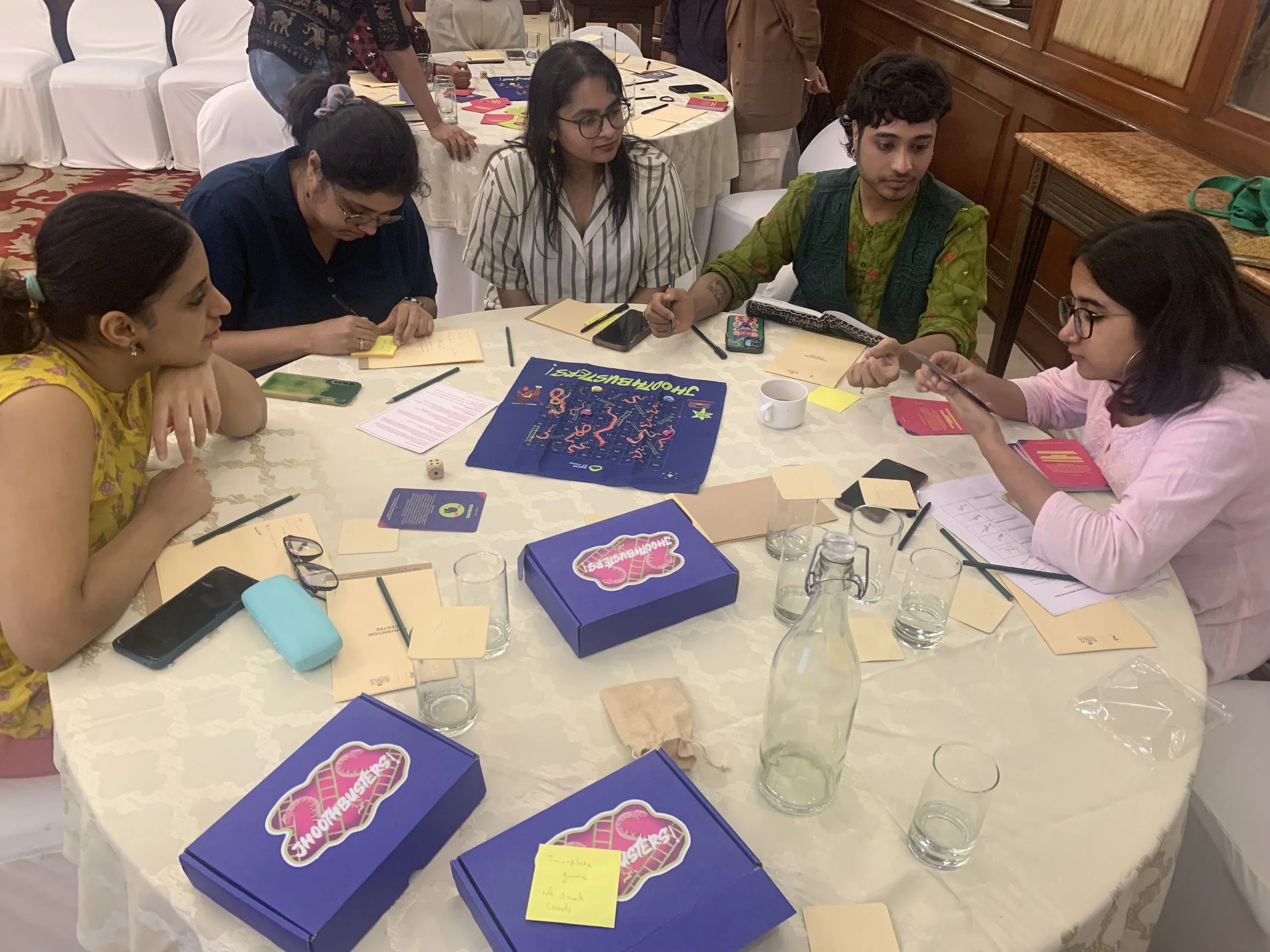
Bringing queer and intersectional feminists together in Delhi (June 2025) to map resources and deepen solidarities in the fight against OGBV. Photo by author.
For one such project anchored by the Association for Progressive Communications (APC), we partnered up with Khabar Lahariya to surface the ways in which online gender-based violence (OGBV) becomes one critical – but underestimated – mode of perpetuating disinformation in India. As part of this broader initiative, I was tasked with developing a toolkit which could be used by Indian feminist movements to (A) familiarise themselves with the intersections between online violence and disinformation, and (B) share, imagine, and explore strategies to combat the surge of anti-gender content. As a queer-feminist researcher and communications specialist working with digital rights movements for close to a decade, I was already familiar -- intimately and professionally -- with the “messy” entanglements of violence, harm, freedom, and connection that the internet affords, and was deeply excited by the potential impact of this work.
Yet, we knew from the start that the project would require a radical reimagination of the conventional problem statements related to digital safety and misinformation. Feminist methodologies and movements have shown us the failures of traditional questions, concerns, and research tactics to adequately represent or address the stakes of harms like hate speech and disinformation beyond offering protectionist or abstentionist solutions. We realised that critical, deeper questions around gender-based violence are necessary, and set about to ground our work in a set of feminist questions, such as:
How are violence and gendered harms framed, and who gets to determine this framing?
How is this harm structured by racism/casteism/sexism?
How are these structural elements built into the design and operations of digital platforms?
How do these conditions evidence what needs to or can be changed?
Is online gender-based violence viewed as a larger socio-democratic harm?
Why is the burden of safety placed on the user rather than the platform?
Can interventions to empower communities to question and act upon these questions?
Keeping these questions front and centre, my co-researchers and I set out to design a community-evolved and community-focused resource that could forefront these complexities and contradictions. By the end of the project, however, I had emerged with more than just a toolkit; rather, with a renewed affirmation in the power, possibility, and politics of feminist ethnographic practice rooted in shared responsibility, memory, and emotions (which define feminist ethnographic approaches). These emerged as critical resources for addressing not only the specific issues of online-gender based violence, but also for broadening our understanding of both technology and violence.
This essay is a narration of what I experienced and learned in co-creating the toolkit and more broadly, as a digital rights actor based in the global south. In the next section, I offer more background on the state of online gender-based violence in the region, and analyse what prevailing frameworks on digital harm do (and don’t) help understanding about the stakes of these harms. I then offer more detail on the process of building the toolkit and our transformative interactions with people on the ground. Having outlined what we learned from this experience, I finally reflect on the important lessons on feminist ethnographic practice offered by this experience.
Disinformation in India: Violent ethnographies and ethnographies of violence
Around Diwali in 2023, 16-year-old Pranshu from central India posted a reel of wearing a saree, following which many people started making hateful and homophobic remarks about the reel. By November 21, when the post had amassed close to 50,000 such comments, Pranshu died by suicide. Yet, Instagram remained unresponsive to the hate comments that continued to populate their reel even after their death, ranging from “if he remained a boy, he would not have died” to “trans people in India have increased, they should reduce”.
35 years into the internet age, digital gender-based violence is still not seen as a legitimate form of violence. There is mass refusal at systemic as well as individual levels to acknowledge the power of the internet in replicating offline patriarchies at scale, and its role in proliferating misogynistic content, disinformation, rape threats, cyberstalking, or blackmail, particularly against marginalised gender and sexualities – of naming digital violence as violence. Even though the National Crime Records Bureau finds that cyberstalking and cyberbullying cases in India is up by 36% after the pandemic, online violence continues to be normalised. It is even deemed inevitable and trivial in comparison to physical harm, despite the overwhelming evidence pointing to its disproportionate impacts on women, LGBTQIA+ and other marginalized identities.
Yet, persistent harassment takes a heavy psychological toll, where the everydayness of such violence, compounded by a lack of response infrastructure, leaves survivors with two choices: either to brush it off and continue using social media, or to deactivate their accounts and censor themselves. The latter, in particular, has broader implications on women’s participation in public discourse and freedom of expression in online spaces, creating a “chilling or silencing effect” where women, in order to safeguard themselves and their bodily integrity, retreat from social media platforms. Sometimes, such disinformation campaigns may also devolve into bodily harm, when reputational risks lead to natal family violence or domestic violence.
When digital violence does enter mainstream discourse through classification frameworks in law or platform policies, the analysis and understanding is inadequate – and rarely articulated as violence itself. Instead of framing such violence around the breach of consent, classification frameworks use typologies like “revenge porn” or “character assassination” which misrepresent the exact nature of these violations. Disinformation is not understood as the complex, nuanced, and multi-modal phenomenon it is, with fragmented and intertwined manifestations. In case of non-consensual distribution of morphed intimate images, for example, a single instance of violence can manifest in different forms of aggression or consent violations: at the level of generating the morphed image, at the level of circulation without consent, and later when used for blackmail or sextortion.
These complexities pose a huge challenge when classifying OGBV. As a feminist researcher working closely with digital security helplines and survivors, I have also been able to observe over the years, that in the Indian context, image-based abuse can take on multiple forms that are not captured in how it’s commonly categorised. It becomes worth noting, therefore, that while classifications may not necessarily reflect a scale that goes from lesser to greater, they may in some cases be interdependent or enable another.
Moreover, mainstream discourse around disinformation revolves majorly around women in politics, media, culture, or human rights, even though it is experienced by all vulnerable sections of society -- as we have seen in the opening examples. In both Raka and Kashish’s case, the scale of harm is made possible by the context, which is not usually factored in while documenting online harms. This is a critical deficiency, and a failure on the part of conventional portrayals and documentations approaches that fail to locate gendered harms and survivor needs in their immediate contexts or against larger structural crises.
A key reason behind such misrepresentation / misclassification is due to gaps in data itself, which is linked to the question of “who gets to define harm”. In her “Library of Missing Datasets” Nigerian-American artist Mimi Onouha refers to the systemically erased and delegitimised ethnographies of marginalised communities as “blank spots,” which are “systematically excluded in our data-saturated society… from the processes of gathering and interpreting that data.” For example, content moderation systems deployed by BigTech platforms like Meta and X fail to tackle disinformation in regional languages, thereby failing to prevent their machinery from being used with impunity to fuel falsehood and hate. That is because centralised moderation does not understand the regional, cultural, or historical contexts of disinformation, and even if a comment in a regional language can be reported, platforms like Instagram will not remove it because it does not violate their global community standards.
This is only one example of how an inadequate understanding informs and impairs solutions — both the absences and the misrepresentations — take on increased consequence in relation to regulatory processes. By and large, regulatory frameworks fail to demonstrate dexterity when it comes to emerging forms of violence. The critical gap between regulation and lived realities of harm is widened in the context of constantly-shifting conditions and modalities of digital violence. While there is broad consensus that laws and policies related to the internet, technology, and cybercrimes need to be updated and strengthened in order to meet the breakneck pace of technological advancement and their capacity for harm, laws have to be developed with rights-centered and trauma-informed approaches.
The parameters of the regulatory process also contribute to these limitations, such as considering individuals (not collectives) as targets of regulatory influence and codifying certain types of violence while precluding others. For example, despite being ranked as the country with the highest risk for misinformation by the 2024 Global Risk Report, India does not have a dedicated or comprehensive law against mis/disinformation, leaving such grievances to be filed under provisions in the country’s defamation or disaster management laws. This proves inadequate for broader manifestations, like in the case of disinformation campaigns against a larger group (eg. religious/ethnic/caste minorities) as the current laws are more suited to defend against targeted attacks on an individual. But they are not very useful when disinformation campaigns attack a community, as we have seen in the Sulli Deals and Bulli Bai case, where images of Muslim women were used to create a virtual auction site and put them up “for sale”, as a targeted campaign against a specific community.
Locating the origins of our toolkit in the feminist response that came before
Yet within this context, feminists across resource-constrained environments of the global south have been shouldering the lion’s share of epistemic labour to remedy the deficits outlined above and disentangle the lived ethnographies of bodies and technology in the global south.
Feminist researchers and community-based workers have noted consistently that falsehoods in conservative communities do not depend on morphed or nude/intimate images but in fact, originate from a narrative distortion causing severe detriment to young women and girls. Such disinformation campaigns severely limit their access to higher education, mobile phones, right to free movement, even escalating to physical violence from natal families and forced/early marriage.
In this context, feminist civil society has been in the vanguard of filling critical gaps in our understanding of tech-facilitated harms resulting from historical and systemic erasure of lived, negotiated, and situated realities. One of the ways is by negotiating with and pushing back against western (English) typologies and architectures of violence, by introducing new classifiers into canons and capturing new experiences unique to local/contextual realities. For example, Mexican organisation Luchadoras, who recently launched their nuanced classification framework for digital violence in the Mexican context, identifies 13 types of aggression and also laid down “considerations” to explain how “in a situation of violence, several intertwined aggressions are likely to occur”. They also encourage reframing violence like “revenge porn” as “technology-enabled image abuse”, to acknowledge the narrative-level harm caused by older, misleading typologies, that exert blame on the survivor instead of on larger systemic failures and the violation of consent.
In the regulatory realm too, feminists unequivocally insist on rights-centric and trauma-informed approaches for their conceptualisation, adoption, and implementation. Violence needs to centre violations of fundamental human and constitutional rights to express, to privacy, agency, and dignity, and not be defined by “modesty” which contain colonial-era tendencies to restrict and penalise sexual expression online. The work of feminist civil society in the global south routinely brings these exigencies to light. Nepal-based organisation Body and Data, in their 2021 study titled “Mapping Laws Relevant to Online Violence in Nepal” for example, notes the absence of consent in the legal language governing online violence. “The law is made with a blanket approach which overlooks consent between individuals engaged in online communication,” says the report which contains legal analyses of 15 cases related to TFGBV using feminist frameworks, “Any sexual content shared between individuals, even with consent, can still fall under this broad umbrella of obscene and immoral activity.””
Other ways in which feminist internet and fem-tech actors in India tackle the problem of hate speech and disinformation in regional languages in India is also by developing technology-focused solutions like Tattle’s Uli and Shhor AI that addresses this gap, particularly with caste-based and anti-gender slurs. The Digital Futures Lab similarly devises handbooks and tools for software engineers developing LLMs or chatbots, so that they do not reproduce existing gender biases that exist in the offline world. The Feminist Principles of the Internet arose from some of these concerns, chiefly to empower women's movements in articulating and exploring issues related to technology, especially as communities fight for healthier, more resilient ways to discover, share, and create online today.
Building JhoothBusters: An interactive toolkit against disinformation
The JhoothBusters team was also among this feminist cohort. The organization has consistently reframed feminist rights for decades through the lens of technologies, culture, and social justice in India, working specifically with women from low income communities, LGBTQIA+ communities, sex workers, among other vulnerable groups. Therefore, when APC embarked on an India-specific study to unpack gendered disinformation in late 2023 (particularly to capture such harms in advance of the then-forthcoming 2024 general elections which would likely increase these harms), the toolkit project presented an opportunity to (1) bring in our feminist framings – on the state of digital issues, normative discourse and framings, and feminist critiques – and (2) consolidate these feminist collective ethnographies of the internet for local efforts.
Following a project inception meeting early 2024, which featured two days of consultations with subject-matter experts and stakeholders from across India, we realised there is a pressing need for a community resource that not only built critical evidence of experiences of online harms but was able to offer critical information on the role of internet governance, platform accountability, feminist counter-narratives and media literacy in curbing the surge of anti-gender content online.
Our feminist grassroots network partners, spread broadly over four states (West Bengal, Assam, Delhi, and Maharashtra), also echoed this need. Their affirmation confirmed the merit of developing a comprehensive toolkit that would enable community leaders to make sense of and articulate these problems from within their respective contexts. We were very clear on what we wanted to achieve with this exercise: To build something that reflects the evolving nature of harms without offering prescriptive solutions, can be used as a tool in community meetings and personal spaces alike, and start conversations around structural injustices that lie at the root of such harms.
Additionally, a feminist approach demanded not only different questions but different sensibilities and methods of data collection – accounting for contextual constraints of caste, disability, age, and access and platforming under-represented voices, perspectives, and stories. To do justice to these ethos, we partnered with Khabar Lahariya, who bring a wealth of experience in surfacing grassroot realities through their journalistic reportage.
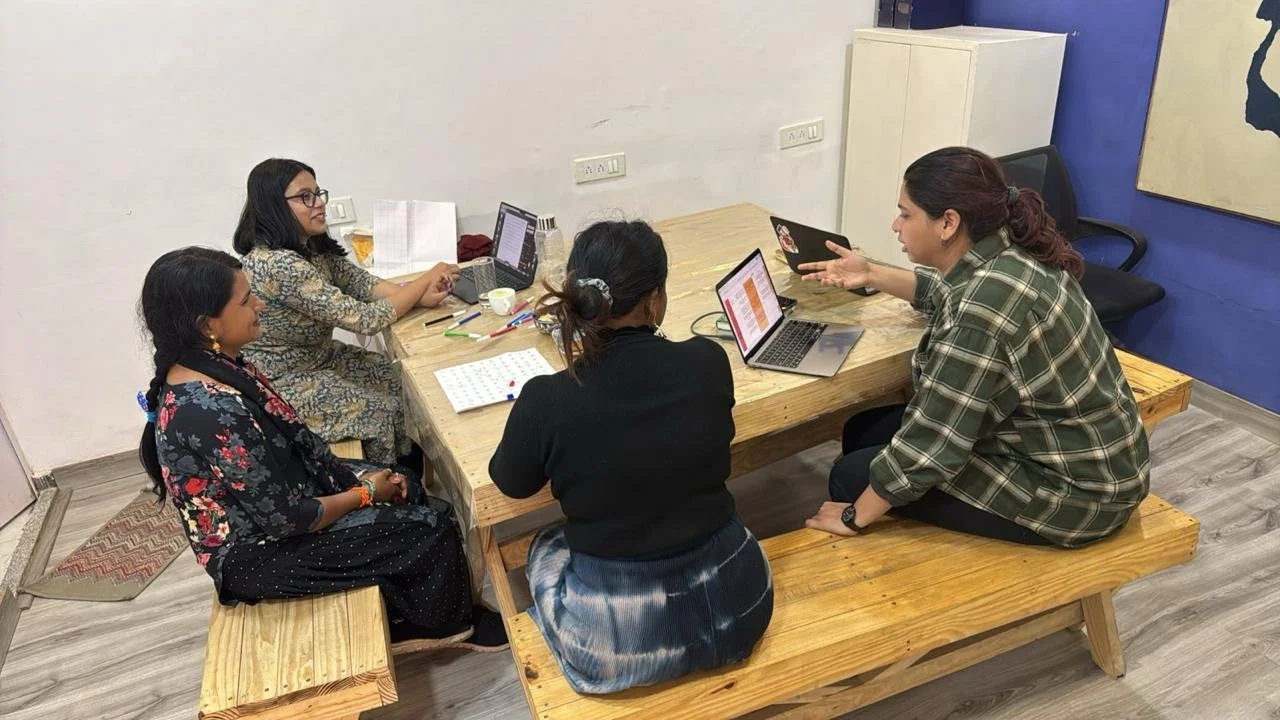
Production meeting with the Khabar Lahariya team at their office in South Delhi, to map the contours and mechanics of the game. Image courtesy of Priya Thuvassery.
Conceptualisation (November 2023 - June 2024)
Following the inception meeting, we began the conceptualisation phase, which ran from November 2023 to June 2024. Here, we set the grounding principles of the work, finally envisaging toolkit-making as an:
Archival practice centering bodies, tech, justice: Our toolkit would surface instances of disinformation in the everyday digital, or what I call “bodies” of evidence, thereby broadening the definitional limits of “disinformation”
Social practice to document the “good, bad, ugly” internet: Our toolkit would not ignore the internet’s affordances of community building and free expression when talking about its harms and demanding accountability from BigTech
Intersectional practice to inform inclusive response: we would try to reflect a nuanced multi-layered understanding of disinformation as it affects various marginal bodies, as well as documented insights and strategies from the ground that can influence meaningful policy and decisions.
Creative practice to ensure community uptake and improve usability: Keeping the engagement factor in mind, we envisioned our toolkit as a board game, modelled after the familiar Chutes and Ladders format, to ensure that the resource has an interactive component built into it. (This was also our way of paying homage to histories of women’s leisure and community-building around play and pleasure, that this resource could then also activate.) We further contemplated translating it into four Indian languages for the communities we predominantly worked with, in order to extend its usability beyond English-speaking spaces.

An early draft of the game board designed with local elements and adapted into four languages. This board is accompanied by a set of 45 quiz cards and playing tokens. Designed by Nayanika Chatterjee.
Want to know more about how to play the game?
Check out Appendix for an inside look.
Research (July - December 2024)
Having finalised the format and tone of the resource/game, we then pondered on our next set of challenges vis-a-vis the scope of our research. We asked, how does one take apart a complex multi-faceted phenomenon like online identity-based disinformation and make its fragmented nature visible?
We spent close to a year talking to community members and toolkit makers on how we can use the game to spark conversations around all aspects of disinformation without diluting the message. In order to depict the problem of disinformation in its full breadth, we realised we first needed to grapple with all its evolving sites, instances, modalities, trends, and ramifications in rural and semi-rural contexts, mapping experiences that are generally absent in (western) definitional frameworks of violence.
To do this, we conducted extensive media analysis, studied secondary research material and reports from peer civil society organisations, as well as our own digital security helpline records, to explore specific instances and types of disinformation in great detail. We were able to identify what kinds of information and insights would be useful for our communities to have. We discussed extensively, for example, if there was sufficient space within our game engine to talk about online medical misinformation, a subset of disinformation that deeply affects our communities and which consists within itself everything from falsehoods about diverse sexualities and transgender bodies to stereotypes around disabled bodies and stigma around sexual rights and reproductive health (SRHR). We also succeeded in highlighting other forms of gendered disinformation not typically included in such conversations like financial misinformation or scams targeting stay-at-home women and AI-based deepfakes (an emerging form of disinformation at the time).
It was clear to us from the very beginning that these difficult conversations cannot begin with impersonal definitions but with resonant and recent case studies that are localised and would be instantly identifiable and relatable for our networks. Over 2024, we chose about forty case studies from news archives and community-based research, to craft provocations and questions around issues that were rooted in immediate contexts.
Development (January - April 2025)
Sometime around late 2024, we completed our literature review and moved the process slowly into scripting the game, onboarding additional resources to translate and design a visual identity for the game.
Writing: We spent about 3-4 months developing the questionnaire around these case studies, which would determine the player’s journey and performance in the game. We used case studies from our media analysis as well as stories from the communities we worked with, to frame questions around the kinds of biases and norms through which disinformation moves, the various forms and impacts of disinformation in the Indian context, and the avenues of response and justice and their inherent inadequacies. We included a brief trivia section for people interested to learn more about each issue or case highlighted in the game, along with directions for additional reading and social media pages to explore for more information.
Translation: We mobilised additional resources to support the translation of the game from English to three Indian languages: Hindi, Bengali, and Marathi. We worked closely with the translators to ensure that the game’s engaging tone does not get lost under the weight of the jargon and research that it originates from.
Design: We also worked with designers who were able to craft a visual language for the toolkit/game that was inviting and appealed to local aesthetics, with colourful motifs rooted in local versions of the game (also known as Snakes and Ladders), and hand-drawn typographies for each language version.
Prototyping: We then worked with a local game production consultant who guided us with choosing the right material for the toolkit, and helped us source the cloth, tokens, packaging material which went on to complete the game. By April 2025, we were ready with our prototypes and eager to test them out with the communities we had already invited for a series of city-level meetings.
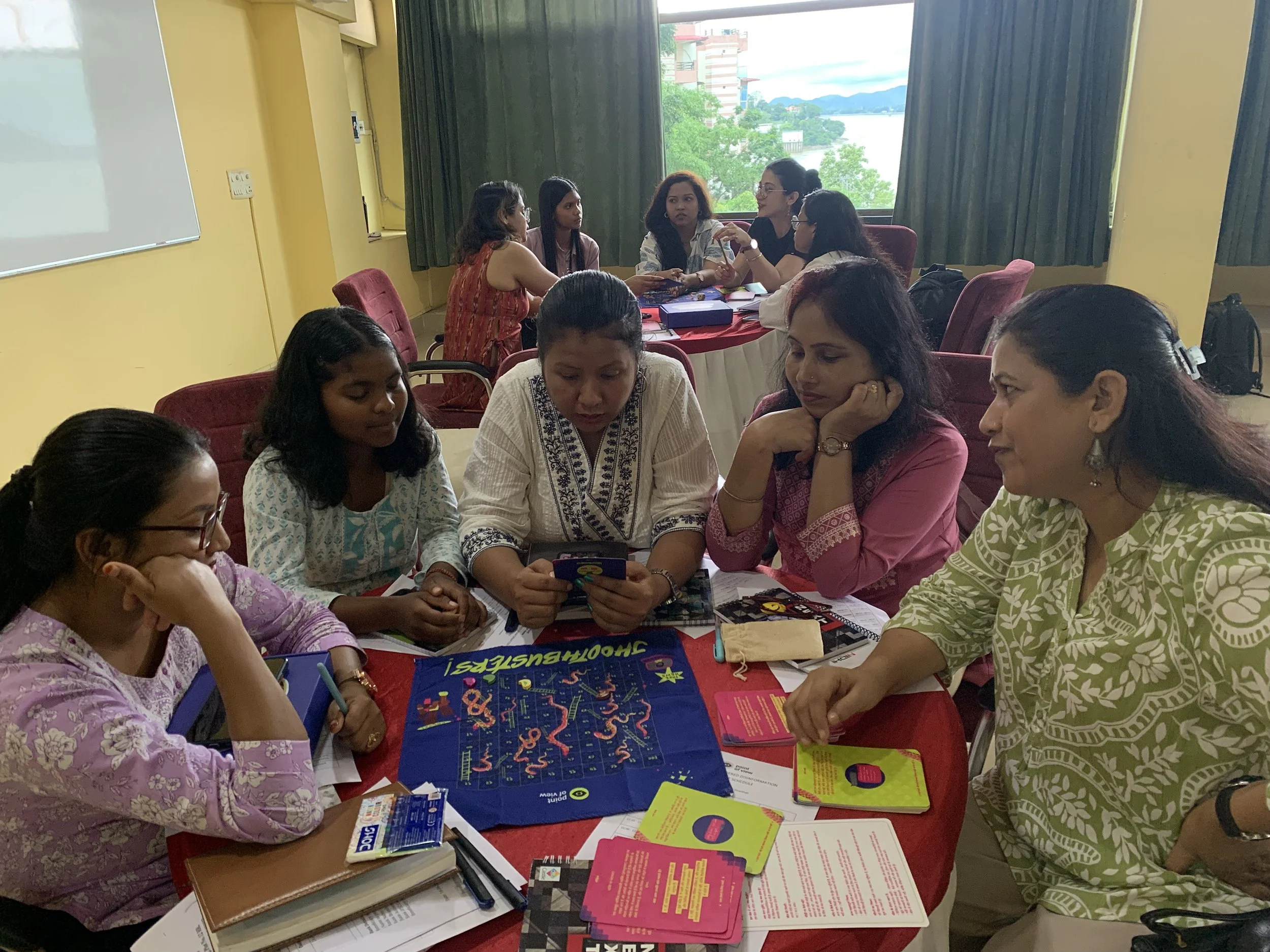
Feminist lawyers, journalists, and activists from Assam converged in Guwahati to interact with and input into JhoothBusters. Photo by author.
Playtesting and Launch (May-July 2025)
We soft-launched the prototype across a series of consultations with feminist civil society, media, law, and academia in five cities: Mumbai, Kolkata, Guwahati, Nasik, and Delhi, through a process also referred to as validation in participatory action research. At each meeting, attended roughly by 30-40 feminists from local feminist movements dealing with digital safety and literacy issues, we used the game to prompt conversations around issues relevant to them. Here are some of the key outcomes we achieved through this participatory feedback process:
At each meeting, the topic of image-based disinformation - gendered, political, meme/satirical - emerged as a topic of interest. Image-based abuse remains one of the largest and most confusing subset of online violence. In the gendered context, it is still erroneously spoken about only in terms of sexual images. The game included this essay’s opening examples of Raka and Kashish. These stories opened up conversations on how falsehoods in conservative communities do not depend on morphed or nude/intimate images but in fact originate from “narrative distortions,” causing severe detriment to young women and girls. Participants shared more examples of such disinformation at the local levels, where mohalla WhatsApp groups turns into “active sites of neighbourly surveillance and moral policing” and end up severely limiting women’s access to higher education, mobile phones, right to free movement, even escalating to physical violence from natal families and forced/early marriage.
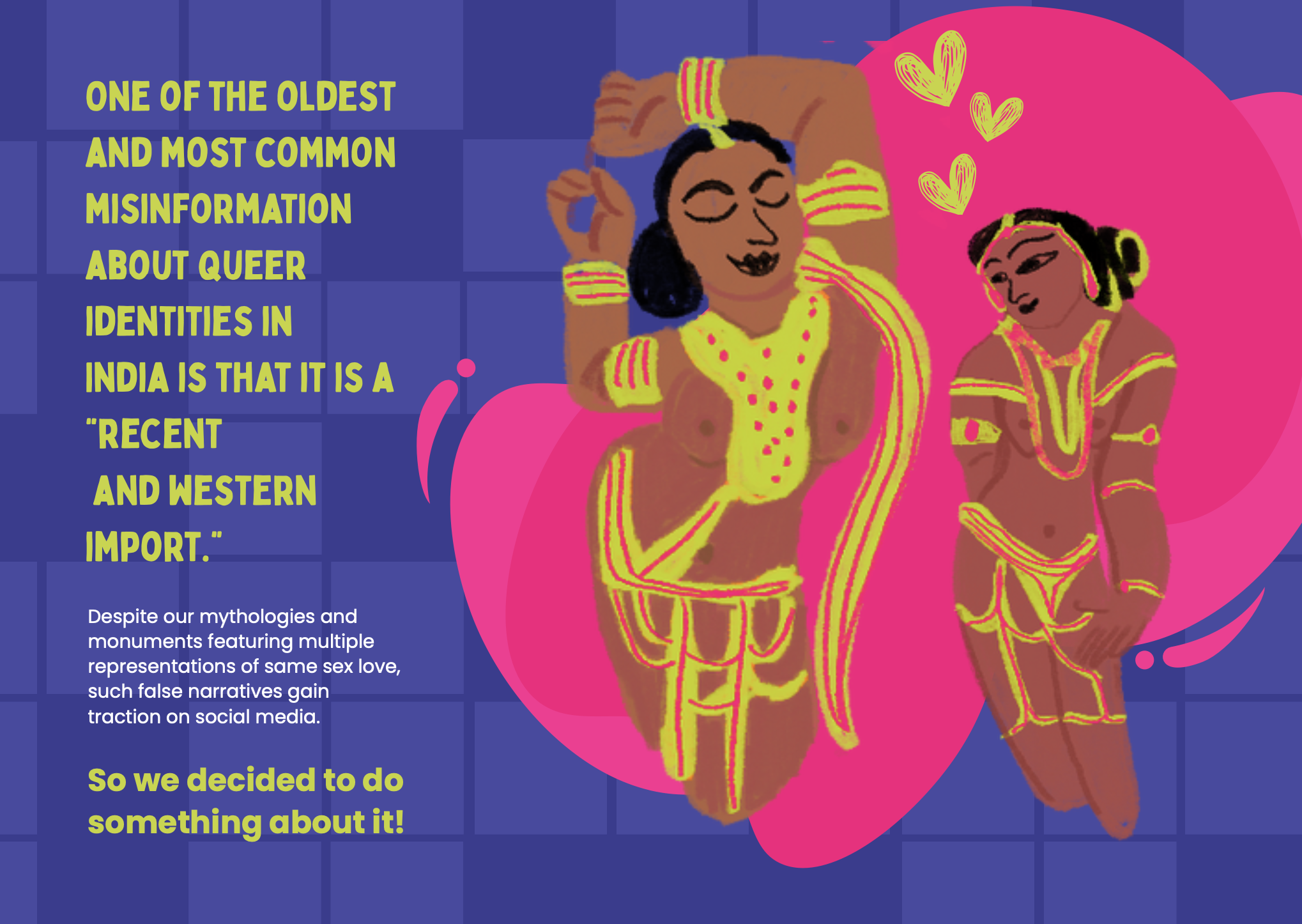
Postcard generated from game which depicts and challenges disinformation.
The meetings also created a space for collective articulation of demands to improve platform and legal safeguards as decisive strategies for tackling online violence and to further enhance womxn’s relationship with technologies like search engines, messaging platforms, social media tools, fin-tech tools etc. Participants at each consultation unanimously acknowledged that cyberlaws (and other laws dealing with gender-based violence) need to undergo a radical shift in how they frame violations. Participants noted the absence of consent and the prioritisation of draconian and protectionist era-language centering modesty in legal language governing online violence. They condemned current legal provisions which penalise any sexual content shared between individuals, even with consent, as “obscene and immoral”, sharing critical reflections on the need to recognise agency and autonomy of individuals over their own bodies and advocating for legal reform that does not criminalise sexual expression online. They also called out platforms for refusing to fix the problems with their convoluted reporting mechanisms and platform moderation systems which continue to lack the cultural awareness required to combat these issues in non-English languages.
Participants also embraced our critique of the narrative trap of “good/bad” internet, or what Donna Haraway calls the “hierarchical dualisms ordering discourse”. They rejected and refused to settle for solutions that required withdrawing from online spaces, thus validating our stance that framing online harms and risks in binaries of “good and bad” takes away the promise and potential for emancipation that the internet offers many groups (including women and LGBTQIA+ communities, marginalised castes, people with disabilities, sex workers and sexuality educators). Moreover, such a framing invalidates the strategies we often develop in order to negotiate with or circumvent the “bad”, i.e. coexist with harms while using the same digital technologies that cause harm, in order to generate livelihood, counter-cultures, joy, leisure, resistance, autonomy, desires, intimacies, and expression.
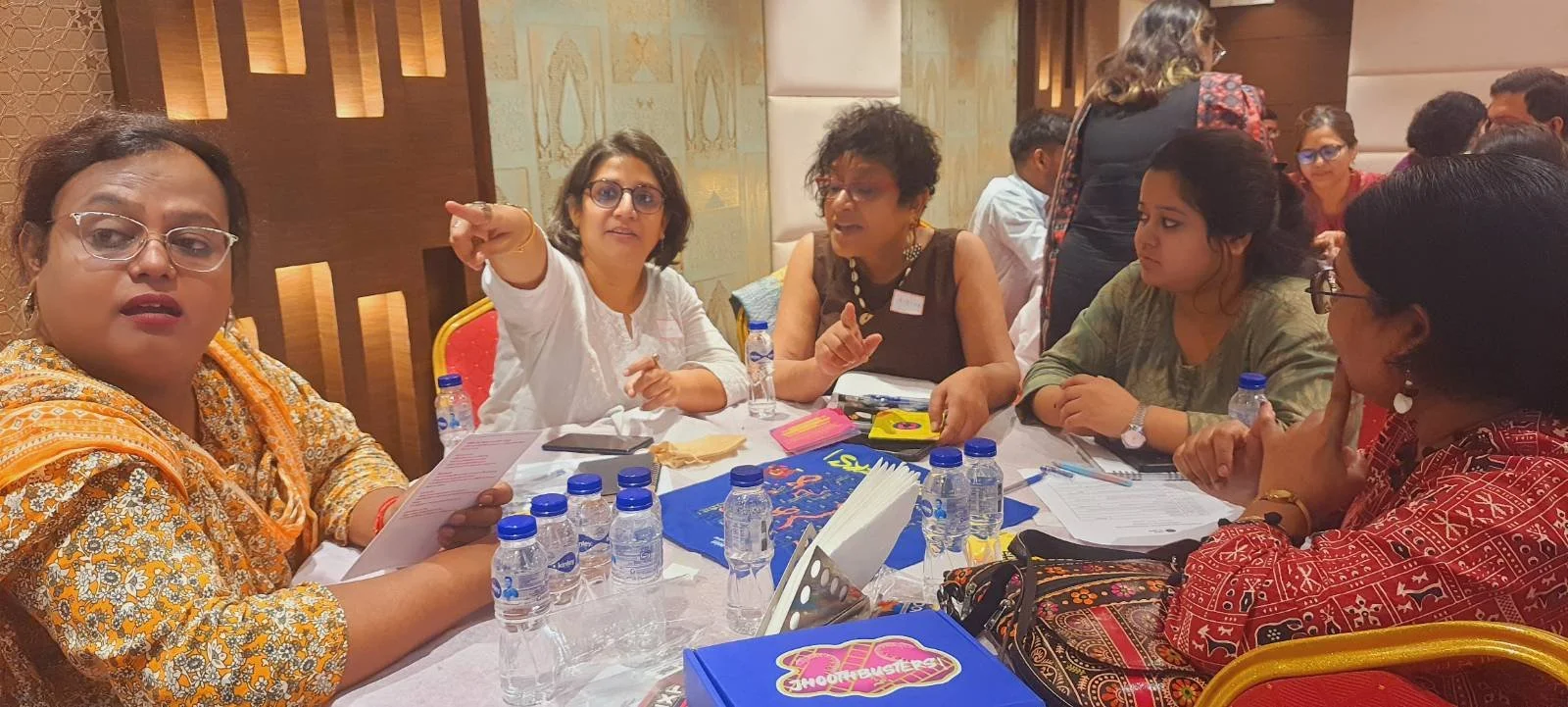
Feminists engaged with old and new frameworks, modes, and strategies for OGBV in Kolkata, West Bengal. Image courtesy of Priyanka Sarkar.
Want to know more about how to play the game?
Check out Appendix for an inside look.
More than just a toolkit: How we seeded ethnographies of care
The prototype showed us that, when used as a conversation starter and a learning tool, the toolkit could be a powerful way to situate harms and freedoms, safety and rights, intersections and regulations within the feminist tech discourse. Additionally, it could open and propel conversation in directions we never anticipated. In the process of making and iterating this toolkit, the most important insights were not only about the specific context of digital harm but also, and perhaps more importantly, about the reality, power, and possibilities of feminist ethnographic practice. This also includes the work of para-ethnographers like me, located within feminist digital rights, and human rights movements, who are constantly creating new compassing practices that centre rights, agency, autonomy, justice, consent, and care for shaping a feminist internet.
The prototype and the processes we undertook to arrive at this articulation of a “community resource to help unpack and counter gendered disinformation” hold critical insights and takeaways for us as well as future ethnographers who seek to document global south feminist ethnographies of the internet, including:
Toolkit-making as a means to amplify the value of intersectional knowledge building frameworks: Toolkits, by attending to contextual realities, open space for better questions. This was clear at a June 2025 meeting in Kolkata. Here, we were collectively discussing strategies to counter online queerphobic and transphobic narratives. Participants deliberated on the inefficacy of “fact-checking initiatives” to counter such narratives steeped in bias and prejudice. Instead, we explored how to leverage queer-coded desires rife in hyperlocal mythologies, histories, and cultures – particularly as it occurs in Brajabuli literature (dating back to 1500 AD) and its lyricism used in late queer filmmaker Rituparno Ghosh’s films – to persuasively combat the false narrative that “queerness is a western fad and has never been an intrinsic part of Indian history and traditions”.
Toolkit-making as an attempt to broaden the corpus of gendered disinformation, by including experiences of those who are not typically represented as a stakeholder/victim of anti-gender online rhetoric. By including the perspectives, stories, and strategies adopted by women from low income communities and queer-trans individuals in particular, we were able to both make visible the “blank spots” in representation, as well as make a compelling case for their inclusion in conceptual and regulatory frameworks.
Toolkit-making as a challenge to protectionist approaches: The toolkit offered a space for our networks to resist framings which “safeguards” women and other marginalized identities and laws which highlight "modesty" rather than consent. Participants named how protectionist regulatory frameworks cause more detriment to womxn’s agency and stifle freedom of expression on the internet, always with amplified consequences for those at more marginalised intersections. Participants were empowered to seek stronger response from institutions like the judiciary or platforms,
Toolkit-making as a platform for the most vulnerable online groups: Through the toolkit, we were able to honor and elevate the voices and experiences of sexuality/SRHR educators and sex-based content creators, who are one of the most vulnerable groups online. They are an indispensable part of the feminist movement who are often at the frontline of combating disinformation and stereotypes about womxn’s bodies. Unsurprisingly, they are also among some of the most censored voices in the offline as well as online spaces. Through the toolkit and subsequent consultations, we were able to flag these concerns at our consultations. We also invited members from these communities who further shared how their voices are routinely suppressed and censored by state authorities, deplatformed and shadowbanned on social media due to targeted trolling, and attacked through a gross misuse of the “reporting” feature by anti-gender entities.
Toolkit-making as an approach to meld institutional and community-evolved strategies: The host of practical strategies to combat online harms which emerged from the toolkit were done so with the help of feminist ethnographers and activist-researchers within our network. The toolkit process helped centralize practices the activists developed with limited resources and despite grave risks. Our proximity to local, on-ground collectivisation efforts has revealed to us instances of critical “jugaad” (which is a Hindi word for a creative workaround, or making the best of whatever is available). The ecosystem is rife with resourcefulness and creative hacks to leverage tech affordances for good, from building informal frameworks of digital care and accountability to leveraging traditional/indigenous practices and spaces for psycho-social relief. These responses are deeply grounded in situated negotiations and contestations, in community-led everyday resistance and safeguarding practices, including “being selective, conscious and strategic” about what we share online, creating anonymous accounts with chosen names, using the internet to connect with allies and seek psychosocial support, etc. Participants also rejected internet shutdowns, social media bans, calls to deter access to phones, and geo-fencing technologies as effective safety or precautionary measures. We were able to collectively defend the internet as a medium that enables new forms of collective action, meaning-making, and public discourse.
The toolkit thus emerged not just as a static deliverable but more importantly as a vehicle through which to practice a feminist, global south ethnography. In deploying the toolkit as a process, embedded in feminist practice, we were able to conceptualize new interventions and strategies, some of which are outlined above. That was critical because such ethnographic approaches have the capacity to not only hold space for and address the specific issues of online-gender based violence, but have broader implications for understanding of both tech and violence. This kind of a feminist knowledge building practice rooted in community needs and community voices also includes a commitment to deepen collaboration and sharing, and this work should be understood as a testament of that fact.
This essay is also an acknowledgement of the labour of feminists whose contributions to the epistemic movement are often invisibilised. Sometime, hacking the patriarchy looks like a group of women journalists in rural India working against patriarchal odds to surface important stories, like those of Raka and Kashish, about what disinformation looks like for millions of women who have negotiated stereotypes, prejudices, biases and reputational risks throughout their lives. It entails ensuring these orally transmitted histories and realities make their way back into mainstream discourse around harms and freedoms. Above all, it looks like feminist media, civil society, and grassroots actors working in tandem to develop new terms of engagement with the internet, a new rhetoric and ethnography of care.
Appendix: How to play Jhoothbusters
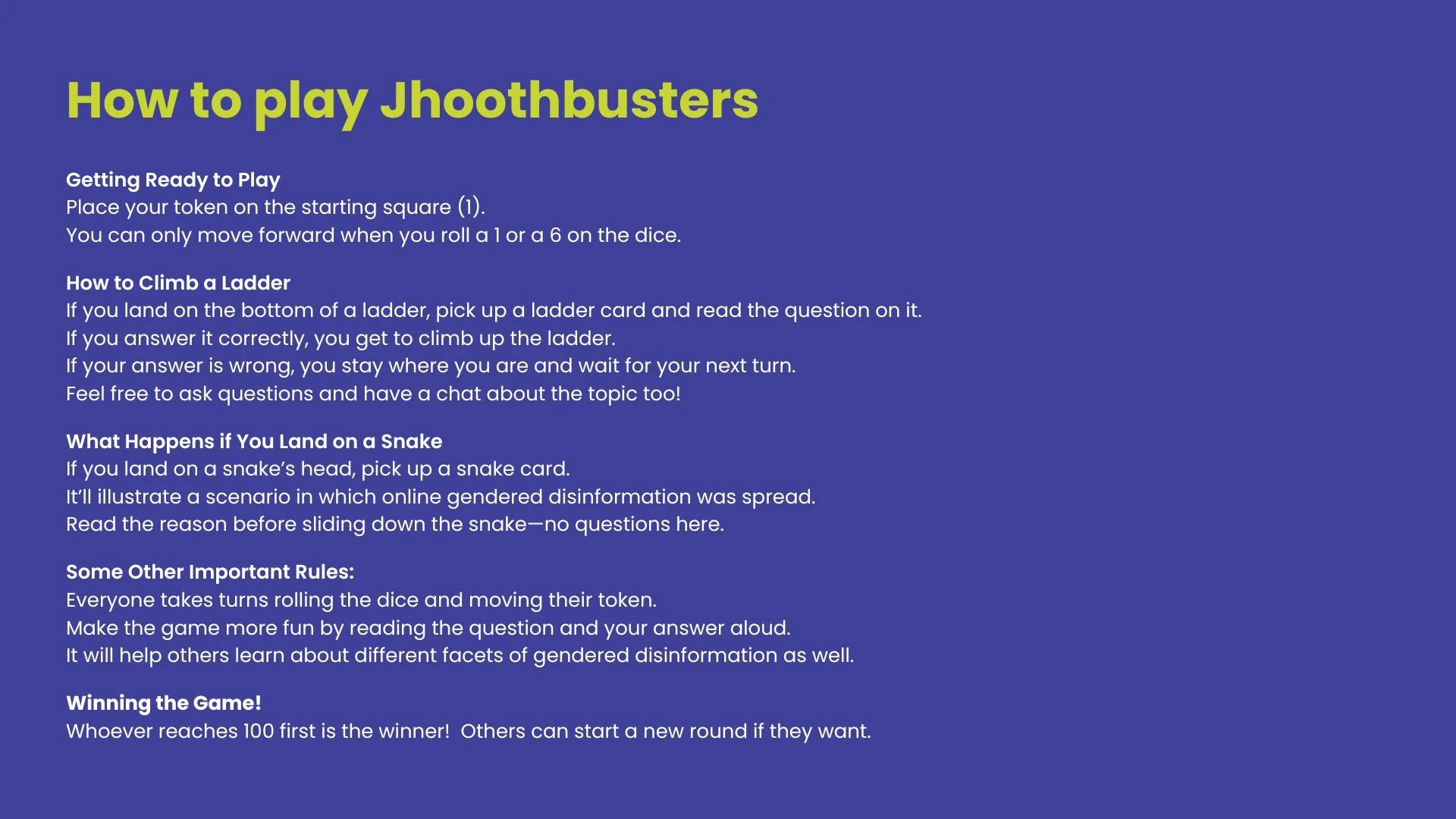
Instructions for playing
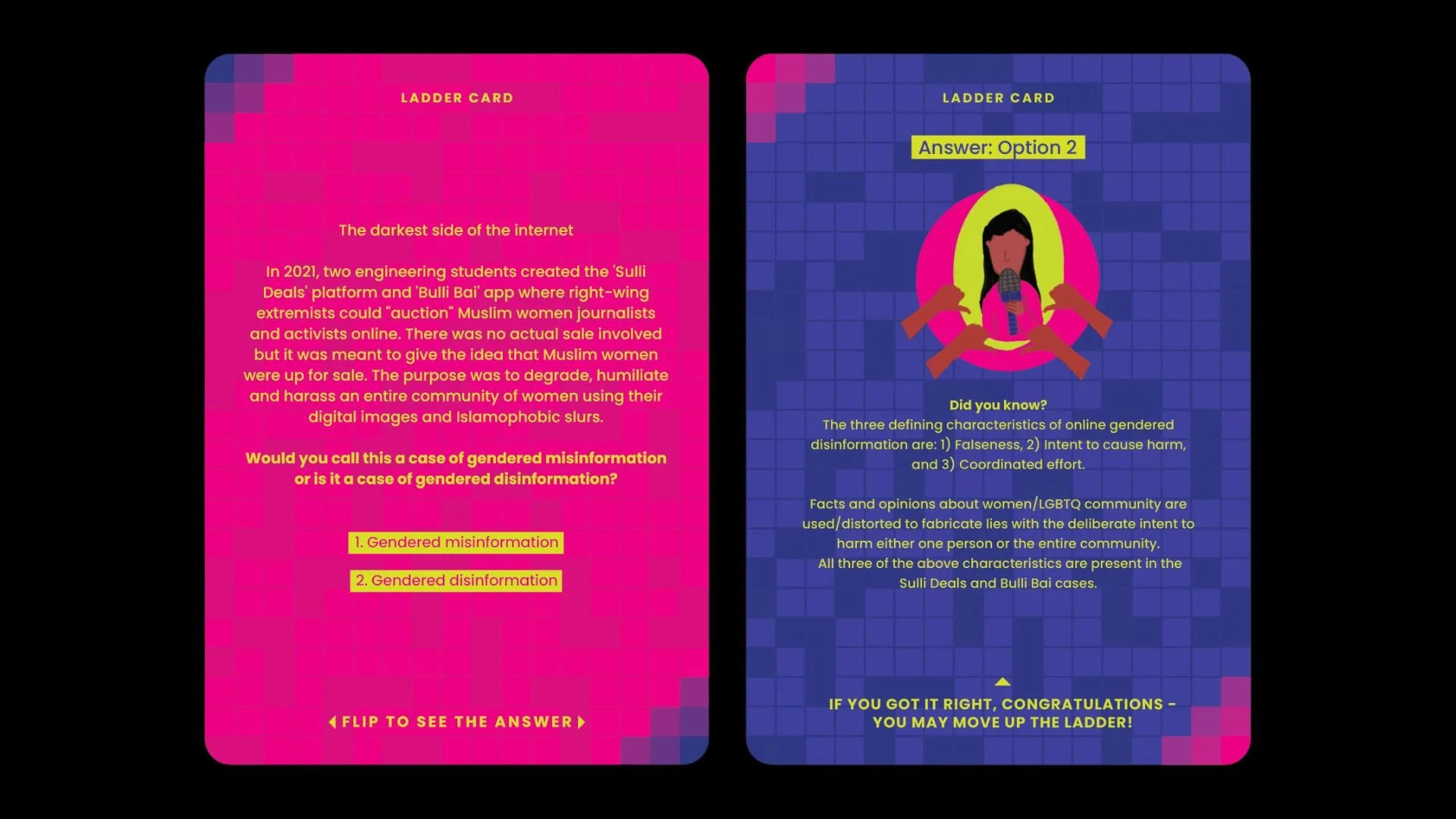
Sample Ladder Card #1
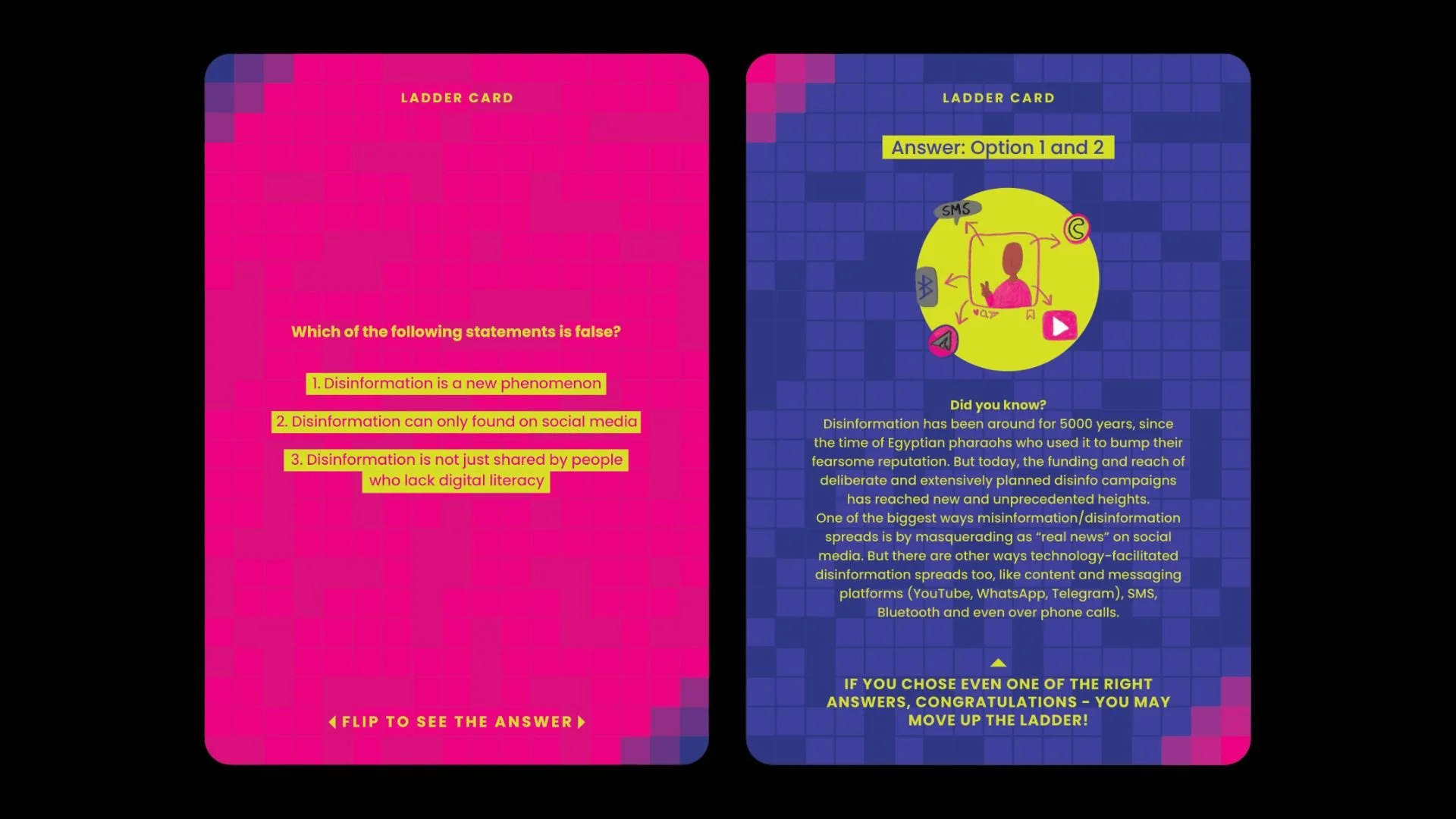
Sample Ladder Card #2
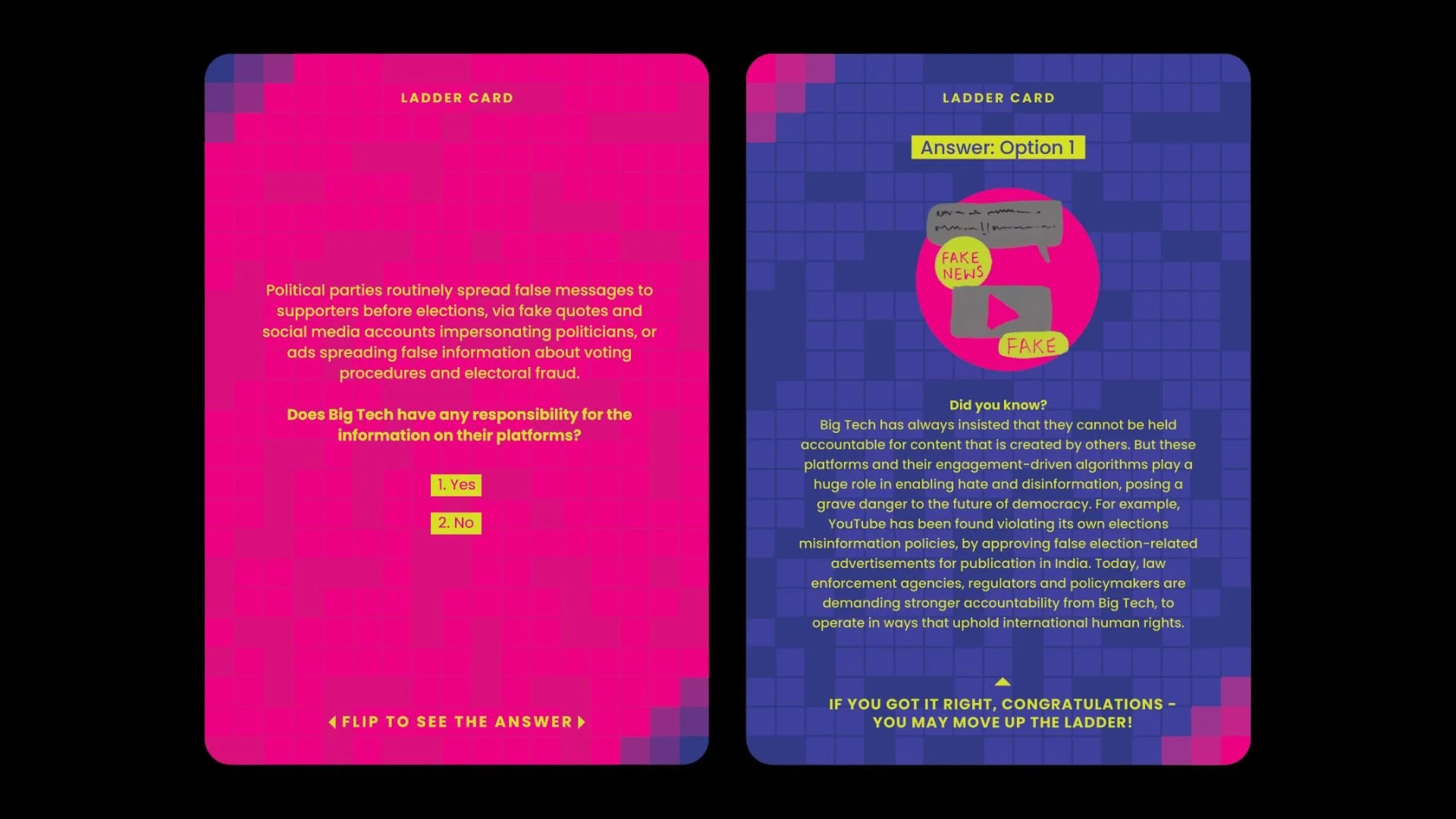
Sample Ladder Card #3
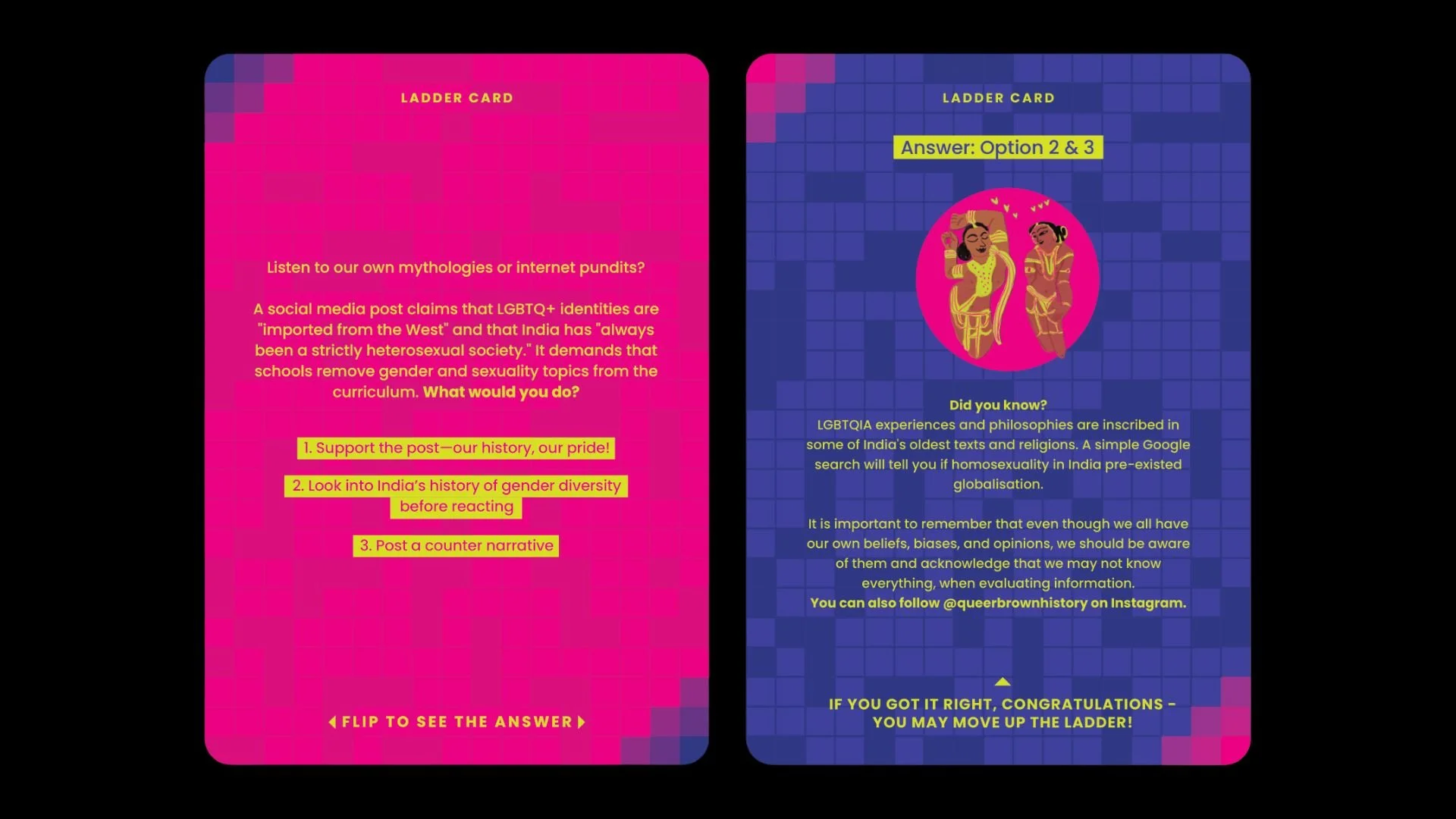
Sample Ladder Card #4
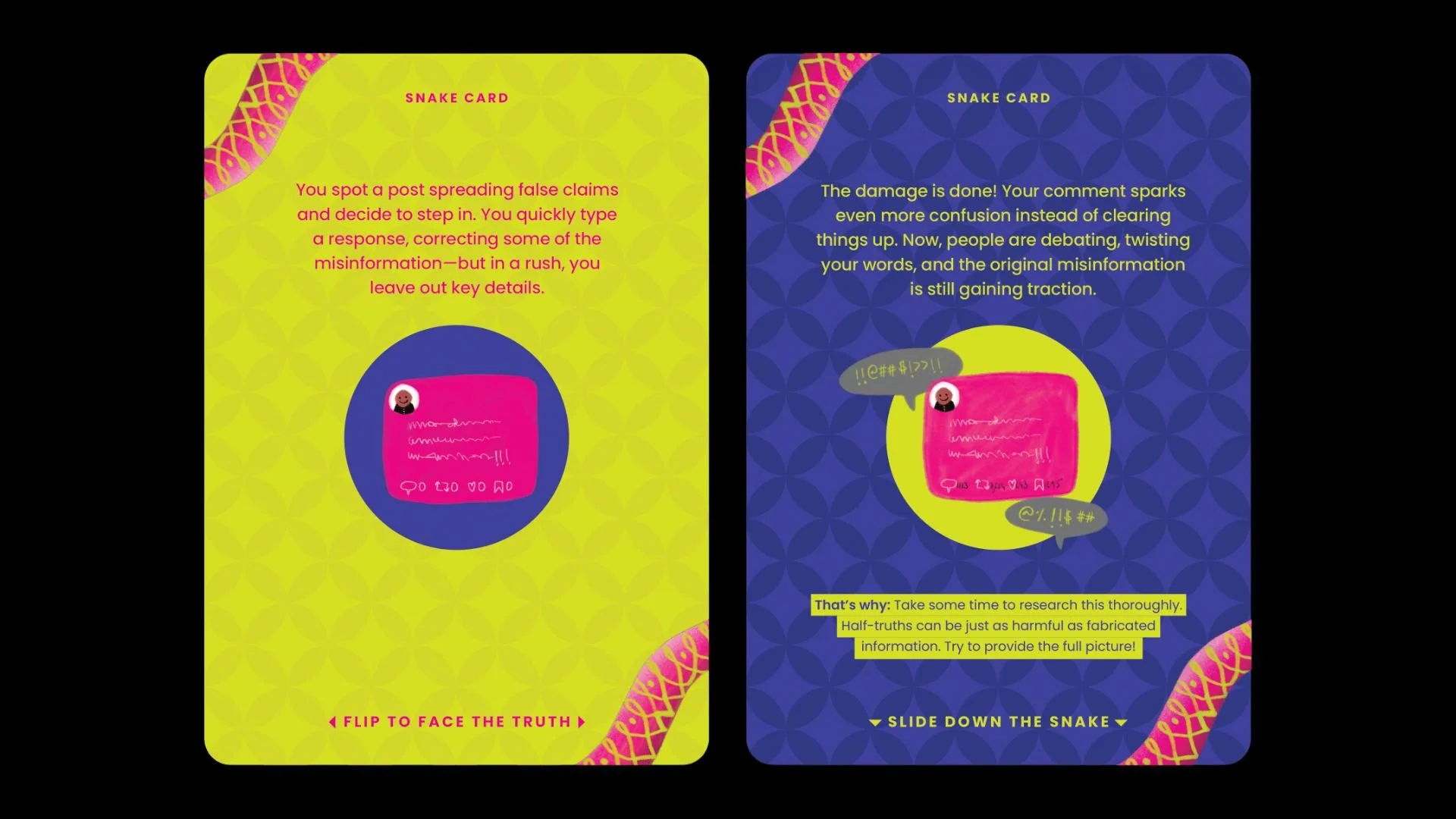
Sample Snake Card #1
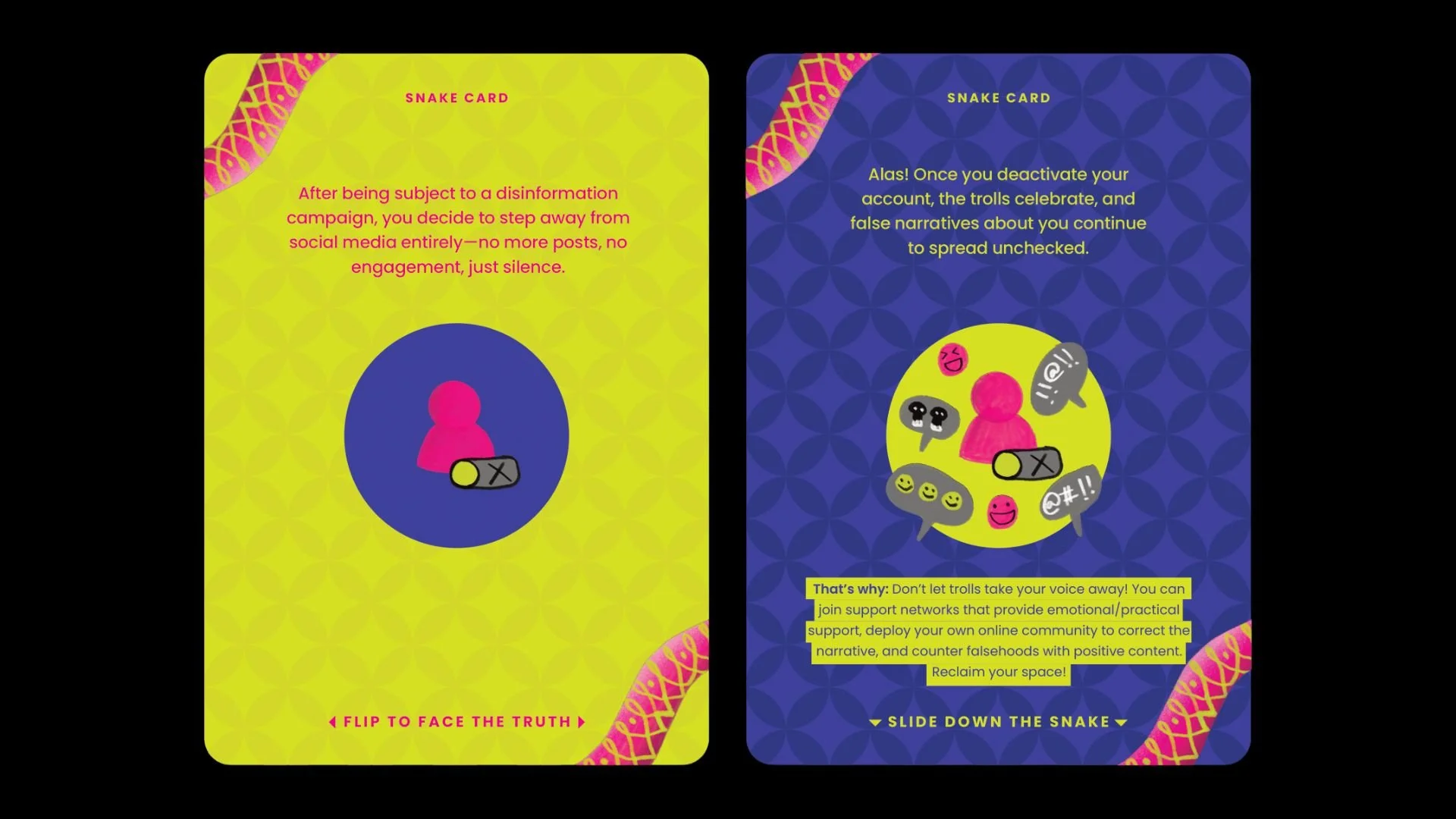
Sample Snake Card #2
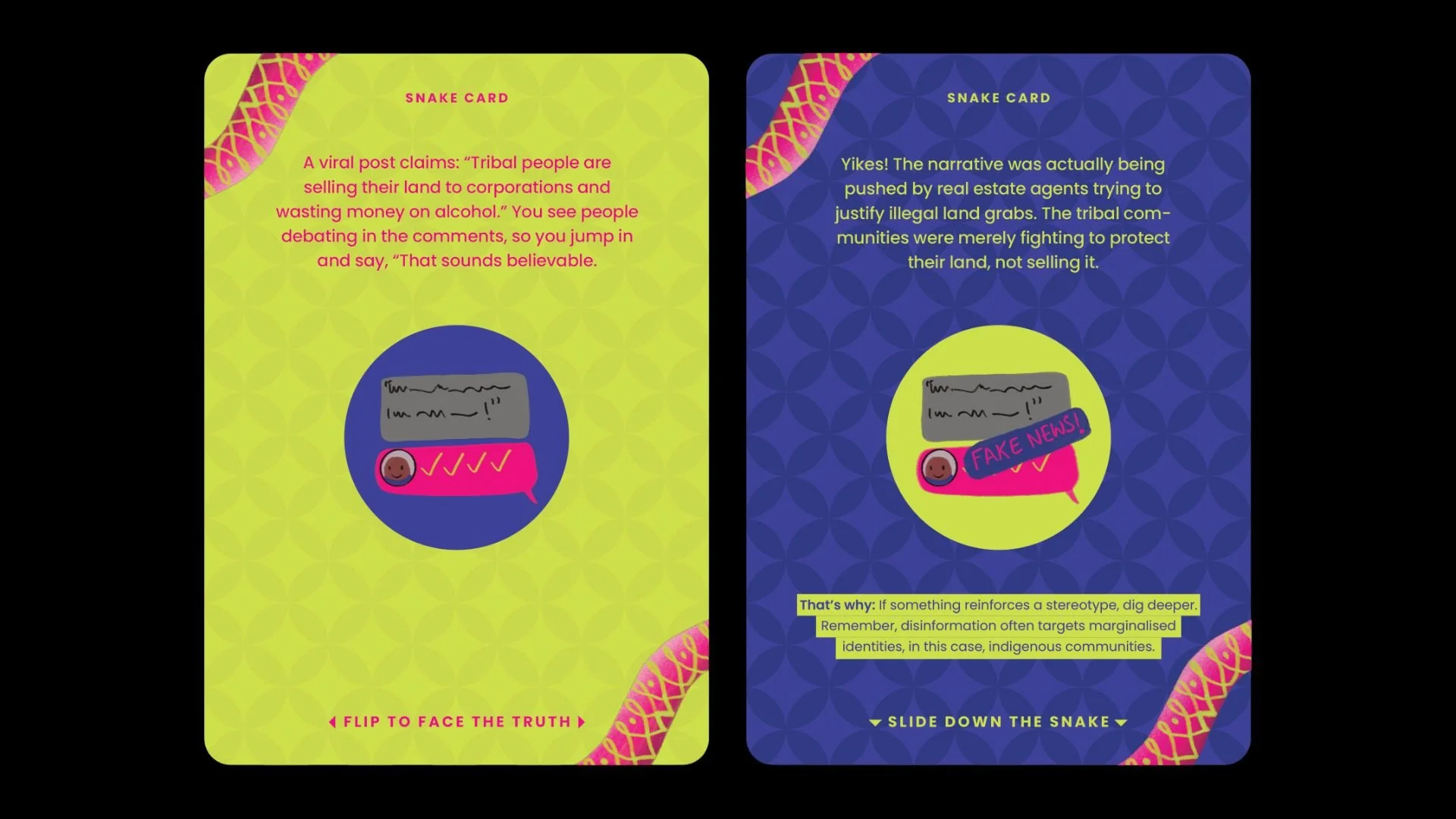
Sample Snake Card #3
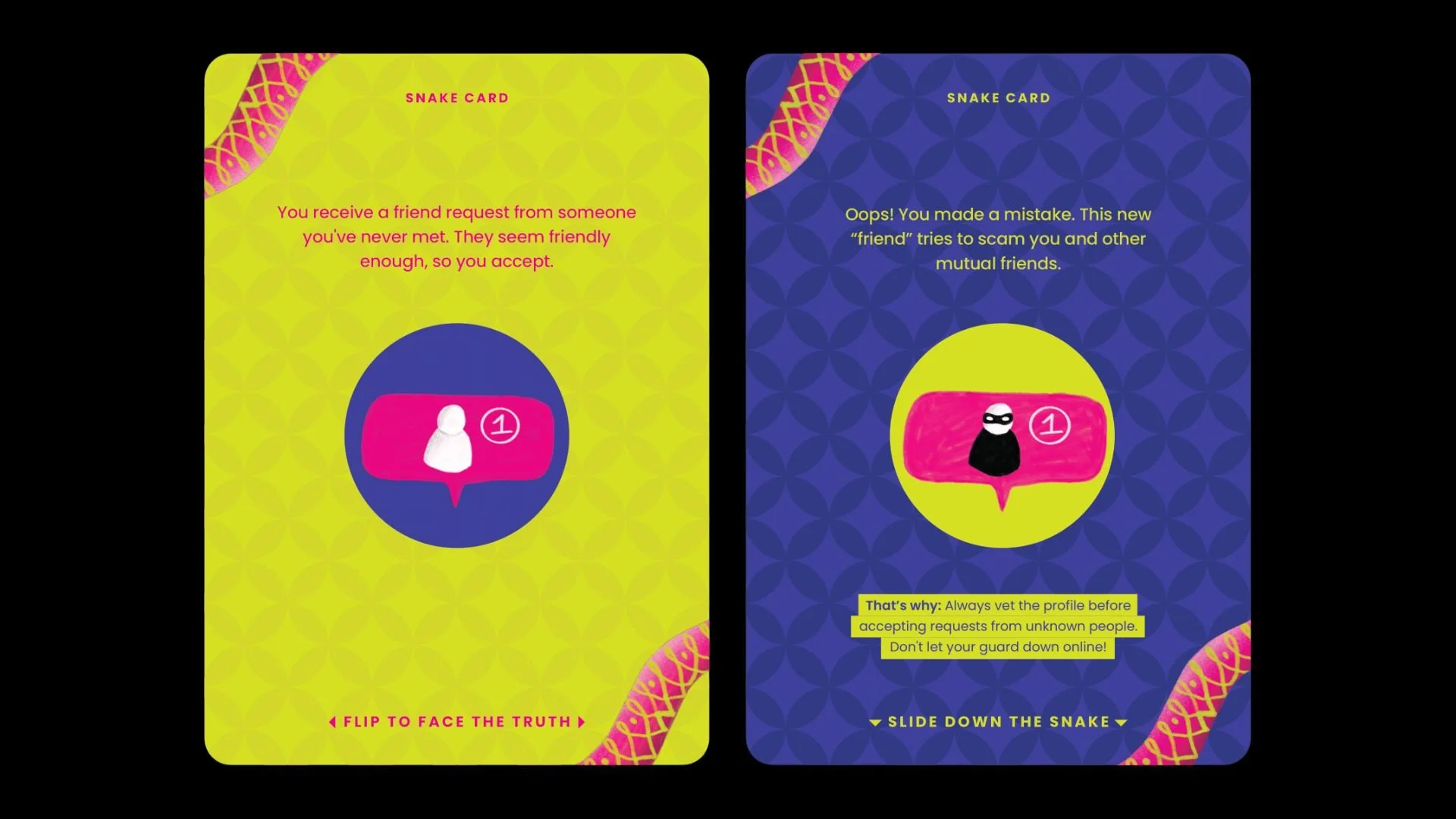
Sample Snake Card #4
References
Barry M. Leiner et al., “A Brief History of the Internet,” ACM SIGCOMM Computer Communication Review 39, no. 5 (October 2009): 22–31.
Bonaventure Saturday and Zulfa Bobina, Systemic Barriers, Gendered Consequences: An Afro-Feminist Analysis of Digital Public Infrastructure in Uganda, South Africa and Kenya (Pollicy, March 2026), https://pollicy.org/wp-content/uploads/2026/03/Systemic-barriers.pdf
Donna J. Haraway, “A Cyborg Manifesto: Science, Technology, and Socialist-Feminism in the Late Twentieth Century,” in Simians, Cyborgs, and Women: The Reinvention of Nature (New York: Routledge, 1991), pp. 149–181.
Gitanjali Khan, “Revenge Porn: Five Important Reasons Why We Should Not Call It by That Name,” Association for Progressive Communications (APC), November 24, 2016, https://www.apc.org/en/news/revenge-porn-five-important-reasons-why-we-should-not-call-it-name
Ishani Mookherjee, “Law and Gender: Notion of ‘Modesty’ in Indian Criminal Law,” Cafe Dissensus Everyday, December 18, 2018, https://cafedissensusblog.com/2018/12/18/law-and-gender-notion-of-modesty-in-indian-criminal-law/
Khabar Lahariya, “Disinformation and Disempowerment: The Gendered Experience in Rural India,” October 24, 2024, https://khabarlahariya.org/disinformation-and-disempowerment-the-gendered-experience-in-rural-india/
Marília Gehrke and Eedan R. Amit-Danhi, “Gendered Disinformation as Violence: A New Analytical Agenda,” Harvard Kennedy School Misinformation Review 6, no. 3 (2025), https://doi.org/10.37016/mr-2020-177
Mimi Onuoha, Missing Datasets, GitHub repository, https://github.com/MimiOnuoha/missing-datasets.
Naman Vig, “Can Regulation Curb the Spread? Evaluating Social Media Controls Against Misinformation,” LiveLaw, January 28, 2026, https://www.livelaw.in/lawschool/articles/social-media-controls-misinformation-regulation-520770
Rishika Singh, “‘Account Restricted’: Sex-Ed Content Creators Fight Shadowbans on Social Media Sites,” The Indian Express, September 7, 2023, https://indianexpress.com/article/lifestyle/life-style/sex-education-content-creators-shadowbanned-across-social-media-sites-8920943/
Rohini Lakshané, “The Crying Shame of Image-Based Abuse,” FactorDaily, August 29, 2024, https://factordaily.com/the-crying-shame-of-image-based-abuse/
Shubha Kayastha and Rita Baramu, Mapping Laws Relevant to Online Violence in Nepal (Lalitpur: Body & Data, 2021), https://bodyanddata.org/wp-content/uploads/2021/12/OnlineGBVLawsMapping-min.pdf
Tanvi Saxena, “Crimes Against Women in India: Trends, Challenges, and Policy Responses,” Social and Political Research Foundation (SPRF), October 13, 2025
Tattle. “Online Gender-Based Slurs and Abuses Don’t Just Happen in English.” Uli. September 5, 2024. https://uli.tattle.co.in/blog/slurs-occur-every-language/
World Economic Forum, Global Risks Report 2024 (Geneva: World Economic Forum, January 10, 2024), https://www.weforum.org/publications/global-risks-report-2024/