Volume 1 • Issue 2 • June 2026
Semi-Structured: The Open-Access Journal for Public Ethnography
Making Knowledge Public
Towards an Ethnographic Sensibility
Excerpt from the Letter from the Editor. Access and read the full letter and the entire issue below.
What gets remembered? Walking through Greenpoint, Brooklyn in the cold early days of 2025, Paul Odér carried this question down streets lined with luxury apartments, industrial depots, past shiny new businesses whose branding referenced the very toxic companies upon which the storefronts were built. His question was not rhetorical. It was methodological — an inquiry into how environmental harm disappears from public memory even as it continues to shape the bodies and lives of those most impacted by it.
The question haunts every piece in this collection. Making knowledge public is rarely as straightforward as it sounds. It is not simply a matter of translation — of converting findings into accessible language and releasing them into the world. It is a set of choices, costs, and negotiations, each shaped by the question of whose knowledge, made public for whom, at what price. And it assumes a public — singular, waiting, ready to receive — that does not exist. There are only publics: multiple, uneven, often in conflict, shaped by different histories of what has been remembered and what has been allowed to disappear.
We want to be honest about the tension in this issue’s title. "Making knowledge public" can sound like a delivery problem — a matter of converting findings into accessible language and releasing them toward waiting audiences. The seven pieces in this collection, taken together, reject that framing. What they document is not a failure of communication but a set of structural questions about knowledge and power. Public anthropology cannot begin at the end of the research process. It has to be woven through the very conditions under which knowledge is made — present at every stage, attentive to how knowledge moves, who it reaches, what relationships it depends on, and how it responds to the questions and needs of the people whose lives are at stake.
This is the second issue of Semi-Structured. Where our inaugural issue, “Ethnography in Action,” asked what ethnography looks like when it moves into the world, this issue asks what happens when it gets there: who controls how knowledge circulates, what becomes visible and what gets erased, and who bears the cost of insisting on what the record should say.
The pieces in this issue are not optimistic in any simple sense. Gentrification obscures lead poisoning. State recognition compresses living knowledge into legal categories. Policy reports flatten what fieldwork took
months to hear. These are not failures of individual researchers or institutions — they are structural conditions that anyone working at the intersection of knowledge and power will encounter.
What these pieces offer is not resolution but a way of staying with the problem.
At what cost?
For whom?
What gets remembered?
Whose needs and desires shape what we pass forward?
These are not questions with single answers. But they are the right questions. The willingness to keep asking them, in public, in specific places, with specific people, is what public ethnography is for.
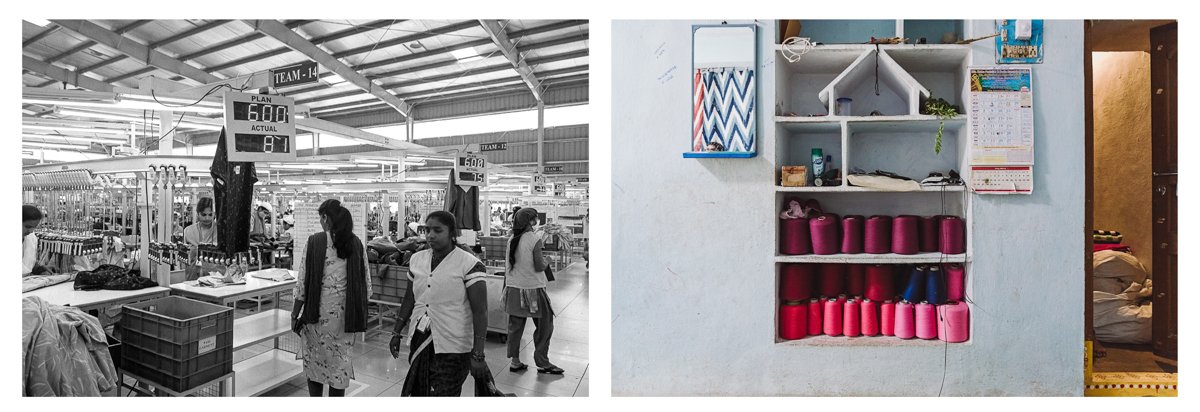
The goal, as we have come to understand it, is not to bring knowledge to the public. It is to excavate where knowledge is already being made — in the pottery household, on the factory floor, in the walking interview, in the room where parents finally get to speak — and to create the conditions under which that making can be seen, heard, and taken seriously. That is what these seven pieces do. That is what we are trying to build.
We are grateful to the communities, interlocutors, and collaborators whose knowledge animates every piece in this collection. We are grateful to the authors who trusted us with their work.
Thank you to our collaborators on the 2025 Public Anthropology Conference: Core Team (Dr. Alanna Warner-Smith and Jean Wogaman), Student Fellows (Katharine Grace McCartha, Kaitlyn Rice, Catherine Comerford, and Haley Armstrong), the Advisory Board, and AU Anthropology community. Our collective insights, collaboration, and praxis during the conference deeply shaped this issue. Thank you to the PEL Interns (Asher Rosen, Claire Hoernemann, Emily DeMaio, and Oscar Ellery), whose discernment and labor helped bring this issue to life.
And we are grateful to our readers for joining this ongoing conversation about what it means and what it costs to make knowledge matter.
The goal, as we have come to understand it, is not to bring knowledge to the public. It is to excavate where knowledge is already being made — in the pottery household, on the factory floor, in the walking interview, in the room where parents finally get to speak — and to create the conditions under which that making can be seen, heard, and taken seriously.
Thurka Sangaramoorthy
Editor-in-Chief
Semi-Structured
Elise Ferrer
Managing Editor
Semi-Structured
Explore Volume 1, Issue 2: Making Knowledge Public