

A-053
About the Author: Ana Victoria Serna is a grassroots archivist, youth organizer, and daughter of migrants based in Brooklyn, New York. In 2024, she participated in a court watching project as a part of the "Power in Immigration Court" seminar (Barnard College & New York Law School), where she witnessed and documented the manifold structural violences of U.S. federal immigration court.
Abstract: "A-053" is a piece that dreams of migrant lives snagged, obfuscated, and yet to be in the violence of immigration court.
Keywords: New York City; anonymization; poetry; connection
Citation
Serna, Ana Victoria. 2026. “A-053.” Semi-Structured (Washington, D.C.), On Ethnographic Witnessing: Student Encounters with Immigration Court, vol. 1 (3). https://doi.org/10.57912/34113291
with their unruly tongues lolling out
dust-muddied beyond recognition beyond manufactured
whiteness third-hand off-brand traction sanded down
by the bellicose asphalt
in the loitering and littering
on the streets that won’t care if you live or if you die
or if you starve freeze fall in the precarity of in-between
fall in the precarity of underfoot or underseen or undeserved
with their threadbare laces
En otra vida you don’t wear these to your hearing
the only pair of shoes that survived the crossing
where the border of nation-state overwhelm the tenuous edges of human and soul
En otra vida you wear proper dress shoes for your hearing
the formidable leather kind that you wore to your first communion
marble-mouthed pine tar throated when you say to the clerk
half-truths that you understand enough English to rise when the dour judge circles her bench
a sullen soured scorned bird of prey robed in implausible deniability and precedent
when you say your red-taped fate could ever be translatable
from the black letter law content contorted distorted on its laurels
biding its time
while your lips and teeth close around la mierda de
good morning thank you your honor have a nice day
choked through forward paletted broken glass tongues of el
gringo the winner-that-has-taken-all
in your delicate indelible inedible
brownness skin like afternoon cafecitos con
buñuelos all practical muscles and practical
callouses
a loaded gun of tairona masculinity gone sour
in a body that can’t help but remember
for that’s what bodies do
En otra vida you don’t wearing this to your hearing
the only body that this life has afforded you
where the hurt of generationalized disguised justified violence hangs
its millstone round your neck
En otra vida you change your mother tongue your sex your skin
beyond legibility
to pass on by those that know how it feels to fly
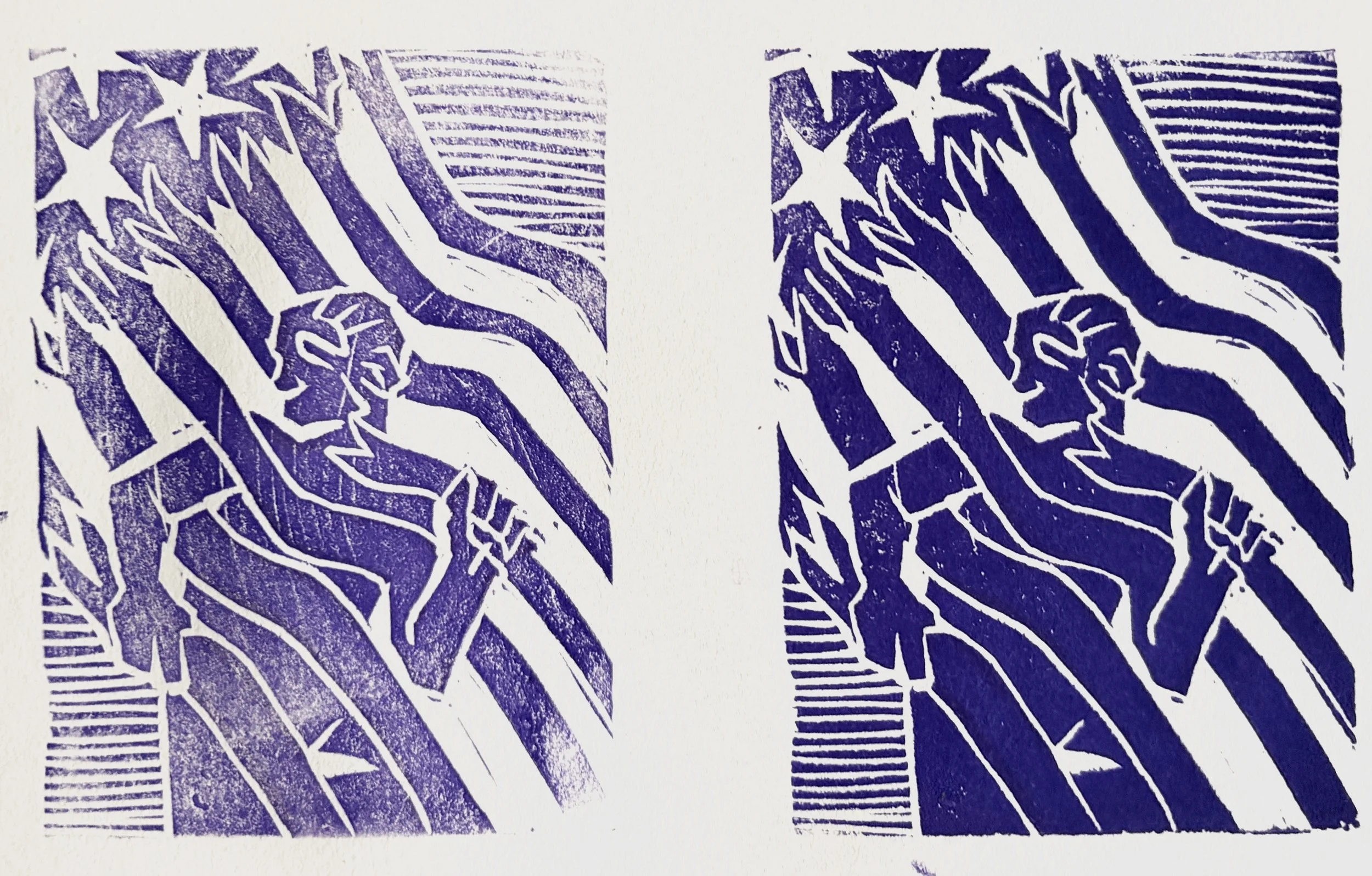
En otra vida I am your mother your sister your kin
I reach across the bar and hold you
the fear washes over us until its tide turns to rage
to grief and to love
until we are whole
until we are free
sana, sana colita de rana
si no sana hoy
sanará mañana
About the issue
This article is part of On Ethnographic Witnessing: Student Encounters with Immigration Court, a special issue of Semi-Structured. This collection features the work of 22 student ethnographers, who offer insights, analysis, and experiences based on hundreds of hours in immigration courtrooms across the country over the last few years. Through their work in observation projects under the direction of scholar-activists Lauren Heidbrink, Amelia Frank-Vitale, and Rebecca Galemba, students gained critical training in ethnographic practice and a crash course in immigration law, especially in the disjunctures between law on the books and law in practice. Understanding that wider audiences would benefit from hearing and learning directly from their students, Heidbrink, Frank-Vitale, and Galemba approached Semi-Structured to steward this thoughtful, ambitious collection. We are honored to run this issue and invite readers to consider what student observers witnessed, felt, and learned in court and why ethnographic observations are important to broader publics.
Semi-Structured is the open-access journal from the Public Ethnography Lab. The journal is dedicated to showcasing ethnography as it unfolds in the world. This journal exists because we believe ethnographic work matters beyond the academy—that the insights generated through sustained engagement with communities, organizations, and institutions can and should inform decisions, shape practices, and drive meaningful change.